Recycling pickup works best when your household knows what to set out, how to prep it, and what to keep out of the bin. If you’re a homeowner, renter, or property manager trying to reduce overflow, avoid rejected loads, and keep your routine simple, a clear checklist helps. Small prep steps—like keeping items clean and sorting the right materials—can prevent common headaches such as odors, pests, and extra bagged trash. Spring cleanouts also tend to increase the amount of packaging and paper coming through your home, which makes consistency even more important. Use the checklist below to tighten up your process, reduce contamination, and make pickup day smoother.
For a deeper overview of how curbside service typically runs and what affects collection outcomes, see Understanding Curbside Garbage Pickup: Processes and Benefits.
If you’re comparing options for recycling pickup in Athens, GA, this checklist can also help you ask better questions about accepted materials, cart sizing, and service expectations.
At a Glance: The Recycling Pickup Checklist
- Keep it clean and dry: Empty and lightly rinse containers to reduce odors and residue.
- Know your “yes” materials: Stick to commonly accepted basics (paper, cardboard, metal cans, many plastic bottles/containers) unless your provider says otherwise.
- Prevent contamination: When in doubt, leave it out—food, liquids, and bagged recyclables are frequent issues.
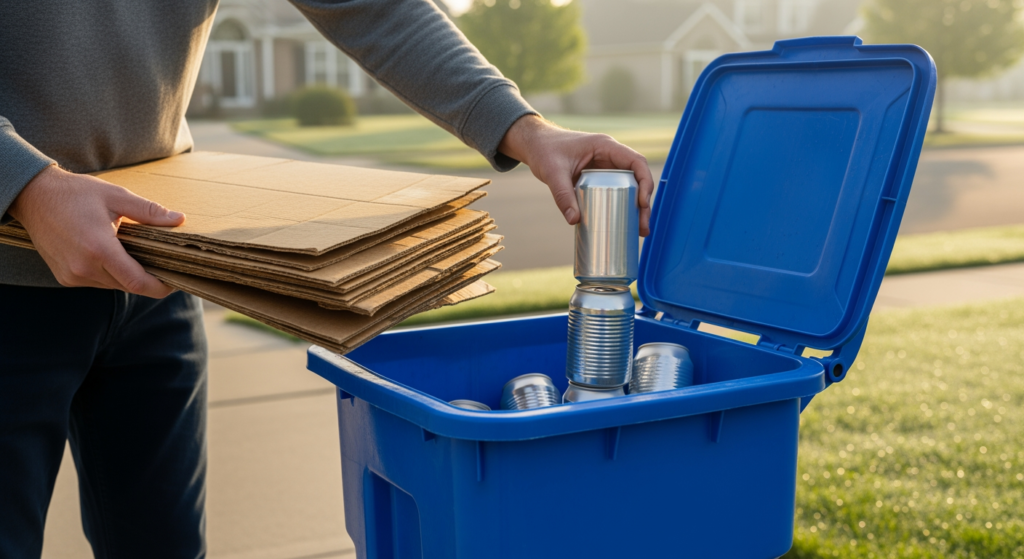
- Break down cardboard: Flatten boxes so lids close and carts don’t overflow.
- Set a simple routine: A small staging area and quick weekly reset keeps the bin usable.
How Residential Recycling Pickup Typically Works
Most residential programs rely on a consistent set-out routine: you place approved recyclables in a designated cart or bin, then the materials are collected and transported to be sorted. The key variable is contamination—items that don’t belong (or recyclables that are too dirty) can reduce sorting efficiency and may cause a load to be handled differently depending on the program’s rules.
Because accepted materials and preparation requirements can vary by hauler and local program, the safest approach is to follow your provider’s guidelines for what goes in the cart, how items should be prepared, and how the container must be placed for collection.
The Hidden Costs of “Wish-Cycling” and Overfilled Carts
Putting questionable items in the bin (“wish-cycling”) can create real downsides for households and neighborhoods. Practically, it can lead to messy carts, lingering odors, and spilled material around the set-out area. Overfilled carts can also mean lids won’t close, which increases the chance of rain-soaked paper and blown litter.
From a time and budget standpoint, poor prep may increase the amount of regular trash you need to manage later, and it can add friction when you’re trying to keep a predictable weekly routine—especially after big deliveries, parties, or cleanouts.
Common Recycling Pickup Mistakes to Avoid
- ✓ Bagging recyclables: Many programs prefer loose items so they can be sorted; bagged material can be treated as contamination depending on local rules.
- ✓ Adding food or liquids: Residue can soil paper and cardboard and create odors in the cart.
- ✓ Including plastic film: Items like grocery bags, shrink wrap, and bubble mailers often require special drop-off options rather than curbside.
- ✓ Forgetting to flatten boxes: Bulky cardboard quickly eats up cart space and contributes to overflow.
- ✓ Throwing in “tanglers”: Hoses, cords, and similar items can cause handling problems; keep them out unless explicitly accepted.
- ✓ Mixing in broken glass or sharp items: Handling rules vary; if your program doesn’t clearly accept it, keep it out for safety.
Your High-Impact Set-Out Plan
- ✓ Do a 2-minute bin check: Remove obvious contaminants (food, liquids, plastic film) before they become a bigger mess.
- ✓ Empty, scrape, and quick-rinse: A light rinse is usually enough; let items drain so paper stays dry.
- ✓ Flatten and bundle cardboard inside the cart: Keep the lid closed to reduce rain exposure and litter.
- ✓ Keep paper and cardboard dry: If rain is expected, consider holding paper items until the next cycle if your program allows.
- ✓ Create a “not sure” box: Collect questionable items and confirm acceptance with your provider instead of guessing.
- ✓ Stage smartly: Store the cart where it’s easy to roll out and where odors won’t become a problem.
Professional Insight: The Small Prep Step Most People Miss
In practice, we often see households do the hard part—separating recyclables—but skip the final “cart readiness” step: making sure everything is loose, reasonably clean, and the lid closes. That last check is usually what prevents overflow, soggy paper, and the temptation to toss questionable items in just to get them out of the kitchen.
When It’s Time to Ask for Help With Recycling Service
- Your cart regularly overflows: You may need a different container size, a second cart, or a routine change.
- Pickup confusion keeps happening: If you’re unsure about set-out placement, timing, or accepted materials, it’s worth confirming directly with your provider.
- Persistent odors or pests: That can signal food residue, liquids, or storage issues that need a different approach.
- You’re managing a multi-unit property: Shared bins often need clearer signage, a staging area, and a simple tenant checklist.
Common Questions Answered
Do I need to rinse containers before putting them in the bin?
A light rinse or scrape is commonly recommended to reduce residue and odors. Exact requirements vary by program, so follow your provider’s preparation guidelines.
Can I put plastic bags or wrap in my household recycling cart?
Plastic film is often handled differently than rigid containers and may require special drop-off options. If your provider doesn’t explicitly accept it in the cart, keep it out.
What should I do with a pizza box?
If it’s greasy or has food residue, many programs treat it as non-recyclable cardboard. Clean, dry sections may be acceptable in some programs—when unsure, discard the soiled portion and confirm local rules.
Why does it matter if the cart lid won’t close?
An open lid can allow rain in (which can ruin paper), increase litter, and make carts harder to service. Flattening cardboard and avoiding bulky items usually helps.
Is it okay to “just try” an item and see if it gets recycled?
Guessing can increase contamination. A better approach is to set questionable items aside and verify acceptance with your provider before adding them to the cart.
Taking Action
A reliable routine comes down to a few repeatable habits: keep items clean and dry, avoid common contaminants, flatten cardboard, and do a quick lid-closed check before set-out. When your cart stays manageable, you reduce mess, confusion, and overflow after busy weeks. If you’re not sure what your program accepts, it’s always safer to confirm rather than guess. Use this checklist as a weekly reset and a training tool for everyone in the home.
Want More Information?
Be sure to visit AAA Sanitation & Garbage Removal’s website for more information about our trash collection services.