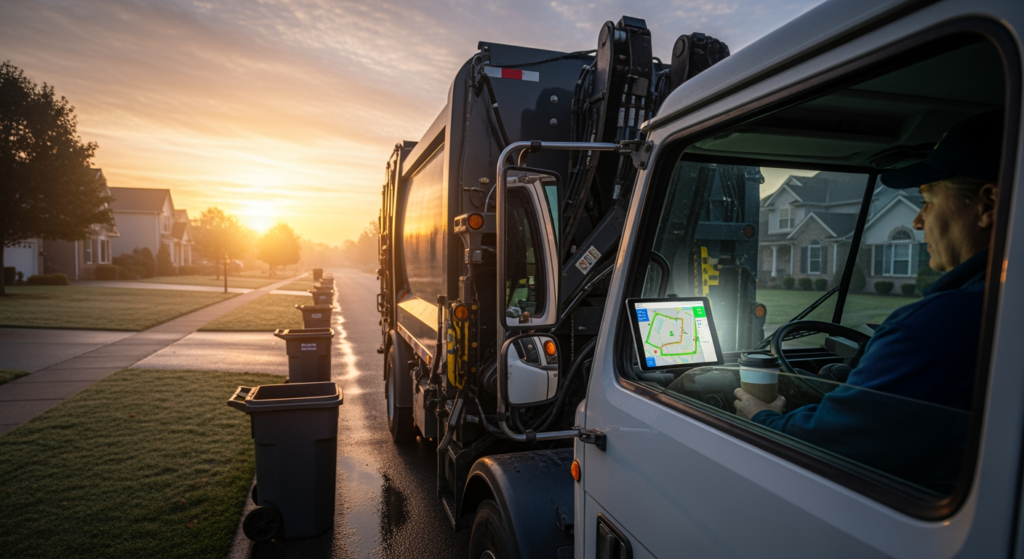
Smarter routing is changing how waste collection gets planned, audited, and communicated—and it’s not just a “tech upgrade.” For homeowners, property managers, and business operators, trash pickup route optimization can influence pickup consistency, street impacts, service notifications, and even how providers document compliance with local rules. The challenge is that routing decisions are increasingly shaped by a mix of operational software, municipal requirements, and neighborhood realities (like access constraints and set-out habits). During the summer months, higher volumes and shifting schedules can make efficient routing even more noticeable on your curb.
If you want a clearer baseline for how service is typically structured, start with Understanding Curbside Garbage Pickup: Processes and Benefits—it helps you spot what’s “normal,” what’s a policy change, and what’s a fixable issue.
The Essentials: What’s changing in collection routing
- Routing software is getting more dynamic. Providers increasingly use tools that can adjust sequences based on constraints like access, service windows, and missed-stop recovery.
- Documentation expectations are rising. More organizations want clearer records of service attempts, route completion, and customer notifications for accountability.
- “Right truck, right stop” planning is a bigger focus. Matching equipment to route conditions can reduce delays from tight turns, blocked access, or overloaded carts.
- Communication is part of the routing story. When routes shift, customers expect proactive updates—especially for schedule changes or service interruptions.
- Efficiency is being balanced with neighborhood impacts. Noise, traffic flow, and start-time policies can shape route design—not just speed.
How modern route planning works (and why it’s evolving)
Route planning used to be mostly static: the same streets in the same order, with minor adjustments over time. Today, many providers are moving toward systems that can incorporate more inputs—like customer counts per area, access limitations, and service-day rules—then generate a route that aims to reduce backtracking and improve consistency.
On the regulations and updates side, the trend is toward more traceability: clearer internal records of where the truck went, when service was attempted, and how exceptions were handled. That doesn’t mean every provider uses the same tools or follows identical processes, but the direction is consistent—more structured routing, more structured reporting.
The real-world impact on your curb, your schedule, and your budget
When routing changes, you may notice differences that feel small but matter day-to-day. A route that’s re-sequenced can shift pickup times earlier or later, which affects when you set carts out and how long they sit at the curb. In commercial settings, timing changes can affect loading docks, employee parking flow, and customer-facing cleanliness.
- Time: Pickup may move within the day even if the service day stays the same.
- Consistency: Better routing can reduce missed streets, but only if access and set-out practices support the plan.
- Street access and safety: Routes may be designed to limit difficult turns, reduce reversing, or avoid high-conflict areas.
- Costs (indirect): For businesses, overflow or extra set-outs can lead to operational headaches when timing and volume don’t match.
The key takeaway: route changes are often designed to improve reliability and accountability, but they can create a short adjustment period where communication and customer habits matter a lot.
Common routing-related mistakes to avoid (quick checklist)
- Assuming your pickup time is “locked.” Even with the same service day, sequence changes can shift the time window.
- Placing carts where they’re hard to service. Tight spacing, blocked lids, or carts behind parked cars can derail an optimized route.
- Overfilling or using the wrong container. Overflow can slow collection and increase the chance of a stop being skipped for safety or practicality.
- Ignoring access constraints. Construction, gates, or temporary closures can force reroutes and create missed pickups if not communicated.
- Waiting too long to report a pattern. One miss can happen; repeated misses on the same block usually indicate a fixable routing or access issue.
A smart action plan for customers during route changes
- Set carts out consistently. Use a routine that works even if pickup shifts earlier than usual.
- Keep access clear. Leave enough space around carts and avoid placing them where vehicles commonly park.
- Separate materials correctly. Use the right container for trash vs. recycling based on your provider’s guidelines.
- Track issues with specifics. Note the service day, approximate time window, and what was set out—details help resolve routing problems faster.
- Ask how exceptions are handled. If your street is frequently blocked (deliveries, school traffic, construction), ask what the preferred workaround is.
Professional Insight: The small details that make routing succeed
In practice, we often see that the biggest difference between a “smooth” route and a problem route isn’t the software—it’s consistency at the curb. When carts are placed in predictable, accessible spots and set out the same way each week, route adjustments tend to work better and service issues are easier to diagnose and correct.
When it’s time to contact your hauler for support
Some situations are hard to solve with DIY tweaks alone. Consider reaching out for help if you notice:
- Repeated missed pickups on the same street segment (especially if neighbors are also affected).
- Ongoing access conflicts like construction zones, gated entries, or chronic curbside parking that blocks carts.
- Business overflow problems where container size or service frequency no longer matches actual volume.
- Confusing schedule changes where you’re not sure which day or general window to plan around.
Frequently Asked Questions
Why do pickup times change even when the service day stays the same?
Routes can be re-sequenced to reduce backtracking, accommodate access constraints, or balance workload across trucks. That can shift your stop earlier or later without changing the day.
Is it normal for routing to change after new homes or businesses are added?
It can be. When service areas grow, providers may adjust route order, equipment assignments, or stop grouping to keep service manageable and consistent.
What should I do if my street is consistently missed?
Document the pattern (day and approximate time, plus any access issues like parked cars or construction) and contact your provider. Specific details help determine whether it’s an access problem, a mapping issue, or a route sequence problem.
Does better routing mean recycling will always be handled perfectly?
No. Routing can improve efficiency and consistency, but recycling outcomes also depend on correct sorting, contamination levels, and how materials are handled downstream.
How can a business reduce service issues during route changes?
Keep container areas accessible, avoid blocking enclosures during expected windows, and confirm whether your pickup has a preferred service time range (especially for shared lots or loading zones).
Taking Action: Stay ready as routing gets smarter
Route planning is becoming more dynamic, more documented, and more sensitive to access and neighborhood constraints. For customers, the best results usually come from consistent set-outs, clear access, and quick reporting when a pattern shows up. If you’re seeing timing shifts or repeated service problems, a short conversation can often clarify what changed and how to prevent misses going forward.
Get in Touch
Fill out our quick form and we’ll get back to you within 24 hours.