
Summer trash odor can turn a normal kitchen routine into a daily “what is that smell?” investigation—especially for homeowners juggling family meals, cookouts, and extra packaging. If your bin seems fine on pickup day but starts stinking two days later, you’re not imagining it: heat speeds up decomposition, moisture, and bacteria growth. The good news is you can reduce odors with a few practical habits that don’t require fancy products or a weekend-long deep clean.
This guide focuses on simple, seasonal steps to keep your cart and can area cleaner, limit pests, and avoid the kind of smells that drift into the garage (or greet you at the curb). For a broader overview of service options and what professional support can help with, see the Benefits of Professional Garbage Removal Services.
If you’re looking for help specifically with summer trash odor services in Athens, GA, it starts with the same basics: keep liquids out, keep lids closed, and keep the “hot” waste (food scraps) contained until pickup.
Key Points to Know Before the Smell Starts
- Odor is usually a moisture problem first. Leaks, drips, and wet bags create the conditions smells love.
- Food waste needs a “sealed path” to the cart. Bag it tightly (double-bag when needed) and avoid tossing loose scraps.
- Heat makes timing matter. Put smelly items out as close to pickup as you can, rather than letting them bake for days.
- A quick rinse beats a rare deep clean. Light, frequent maintenance prevents buildup that’s harder to remove later.
- Closed lids reduce odor and pests. A lid that won’t shut is an open invitation for flies and animals.
How Summer Trash Odor Builds Up in Your Bin
Trash odors typically come from a mix of organic waste (meat packaging, dairy, leftovers), moisture, and warmth. When liquids seep into the bottom of a bag—or the cart itself—bacteria break down that material faster. Add heat, and the process accelerates, creating stronger smells and attracting flies.
Another common contributor is “hidden residue”: a small drip from chicken packaging, a torn bag, or a sticky takeout container that never fully emptied. Those residues can coat the inside of a cart over time. Even if you use liners, odor-causing gunk can still collect around the rim, lid, and wheels where bags rub and leak.
Why Timing Matters More in Warm Weather
In warmer months, the same bag of garbage can smell noticeably worse in a shorter window. That can affect your comfort at home (garage and side-yard odors), your curb appeal, and your cleanup time if a bag breaks or a cart needs scrubbing.
Waiting can also create a cycle: stronger odors attract more flies, which lay eggs, which can lead to maggots—especially when there’s moisture and food residue. The longer odors linger, the more likely you’ll need a more involved cleanup rather than a quick rinse-and-reset.
Common Warm-Weather Odor Mistakes (Checklist)
- Putting loose food scraps in the cart — Even small amounts (like plate scrapings) can create big smells fast.
- Tossing “drippy” packaging unwrapped — Meat and seafood packaging should be sealed before it hits the bin.
- Overfilling so the lid won’t close — A cracked-open lid increases odor release and invites pests.
- Letting liquids go in the bag — Soups, marinades, melted ice, and drink cups can leak and soak everything.
- Ignoring small spills in the cart — A quick rinse now prevents a baked-on mess later.
- Storing the cart in direct sun when you have options — Extra heat amplifies odor (shade can help when available).
A Simple Summer Odor-Control Routine That Works (Checklist)
- Freeze the worst offenders until pickup day — Seal meat scraps, bones, and seafood waste in a bag and freeze to reduce smell.
- Double-bag messy food waste — Use a second bag when you suspect leaks (especially for wet or sharp items).
- Empty and rinse containers before tossing — A quick rinse reduces residue that causes odor.
- Keep liquids out of the cart — Pour off excess liquid and let wet items drain before bagging.
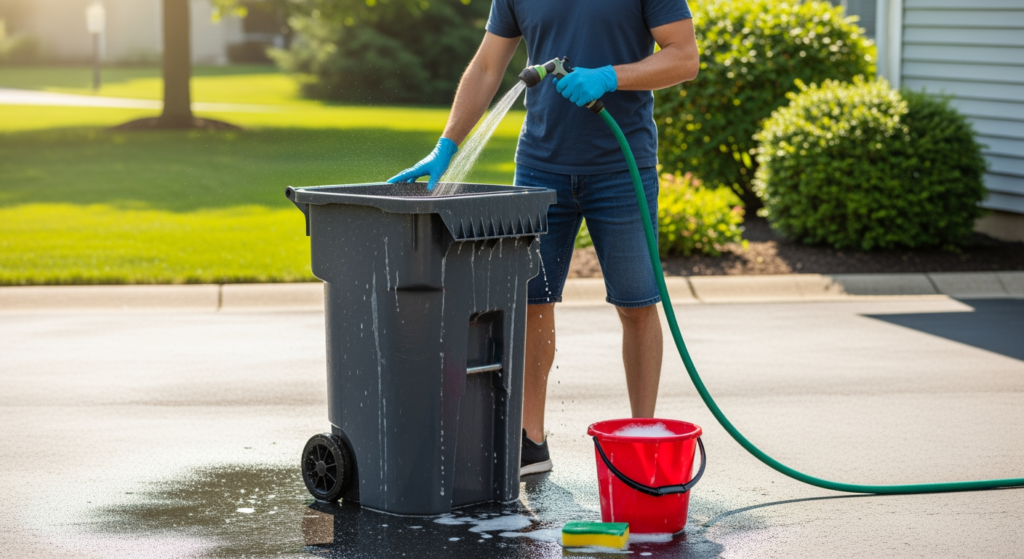
- Do a 2-minute cart reset after pickup — If there’s residue, rinse with a hose and a small amount of dish soap, then let it dry with the lid open briefly.
- Use a deodorizing layer (optional) — A light sprinkle of baking soda in the bottom of the cart can help absorb odors.
- Set a “smelly waste” reminder — The night before pickup, move sealed, smelly bags from freezer/garage to the cart.
Professional Insight: The Small Leak That Causes the Big Smell
In practice, we often see that the strongest odors come from one small failure point—usually a tiny leak at the bottom of a bag or residue around the cart lid—rather than “too much trash.” When homeowners focus on preventing drips and doing quick, frequent rinses, the smell problem often becomes much easier to manage.
When It’s Time to Get Help (or Adjust Your Setup)
Consider reaching out for support or changing your approach if you notice any of the following:
- Recurring odor even after rinsing — Persistent smells can indicate buildup in seams, around wheels, or under the lid.
- Frequent bag breaks or leaks — You may need heavier-duty bags or different bagging habits for wet waste.
- Flies or maggots showing up repeatedly — This is a sign that food residue and moisture are lingering.
- You routinely can’t close the lid — It may be time to reduce volume, adjust disposal habits, or explore service options.
- Odor is affecting indoor areas — If smells are drifting into a garage or entryway, prevention steps should start earlier (kitchen/holding area) rather than at the curb.
Common Questions Homeowners Ask
What’s the fastest way to reduce bin smells without buying special products?
Focus on keeping liquids out, sealing food waste tightly, and doing quick rinses after pickup when residue is present. A small amount of dish soap and water is often enough for routine maintenance.
Should I put food scraps directly into the outdoor cart?
It’s usually better to seal them first. Bagging (and freezing the smelliest items until pickup day) helps reduce odor and keeps residue from building up inside the cart.
Can I use baking soda for odor control?
Baking soda can help absorb odors when used lightly in the bottom of a clean, dry cart. It works best alongside leak prevention and regular rinsing.
How can I prevent leaks from meat or seafood packaging?
Drain excess liquid, wrap or bag the packaging, and tie it off tightly. For strong-smelling waste, sealing it in a bag and freezing until pickup day can help reduce odor.
Do rules for trash and recycling change by area?
Yes. Accepted materials and preparation requirements can vary by provider and locality. When in doubt, confirm the current guidelines for your specific service.
Moving Forward
Odor control in warm weather comes down to three things: reduce moisture, contain food waste, and keep residue from building up. A couple of small habits—like freezing the smelliest items and doing a quick post-pickup rinse—can make a noticeable difference. If you’re still dealing with persistent smells or repeated messes, it may be time to adjust your setup or ask for help.
Book Your Consultation
Schedule a free consultation with our experts.