

Choosing the right trash cart size sounds simple—until your lid won’t close, your bag pile becomes a driveway sculpture, or you’re paying for more capacity than you actually use. This guide is for homeowners, renters, landlords, and small businesses who want a practical way to match a cart to their real weekly waste. Getting trash cart sizing right matters because it affects day-to-day convenience, overflow risk, odor control, and how smoothly pickup day goes.
Fall cleanouts can also change your “normal” volume fast, so it helps to plan for seasonal spikes without living with an oversized cart year-round. For a broader look at how service typically works from curb to truck, start with how curbside garbage pickup works and what to expect.
If you’re comparing options for trash cart sizing in Athens, GA, the goal is straightforward: pick the smallest cart that reliably fits your weekly bag count (with a little buffer) and still rolls easily to the curb.
The Essentials for Trash Cart Sizing
- Start with your weekly bag count: Track how many full kitchen bags you set out in a typical week before choosing a bigger cart.
- Plan for “lid-closed” capacity: A cart that only works when it’s overfilled is a cart that will cause headaches.
- Right-size for your household: More people usually means more packaging, food waste, and bathroom trash—capacity needs rise quickly.
- Use recycling to reduce cart demand: Diverting cardboard and containers often cuts trash volume noticeably (results vary by household and local rules).
- Keep weight and mobility in mind: Bigger carts can be harder to roll, especially on slopes, gravel, or long driveways.
- Expect occasional overflow weeks: Move-out cleanups and big deliveries may require a special pickup or temporary plan instead of a permanent size increase.
How Trash Cart Sizes Work in Real Life
Trash carts are measured by volume (typically in gallons). That number is useful, but it doesn’t automatically translate to “X bags every time” because bag sizes, how tightly you tie them, and what’s inside (light packaging vs. dense material) all change the fit. The most practical approach is to think in three layers:
- Volume (space): How many bags physically fit with the lid closed.
- Weight (lift/handling limits): Dense loads can become difficult to roll and may run into service limitations depending on provider and equipment.
- Shape (bulkiness): Boxes, rigid containers, and odd-shaped items waste space even if they aren’t heavy.
For beginners, a simple test works well: for two normal weeks, note how many full kitchen bags you generate and whether you ever have to “push the lid down.” If you’re compressing bags to make them fit, you’re probably under-sized. If your cart is half empty most weeks, you may be paying for convenience you don’t need.
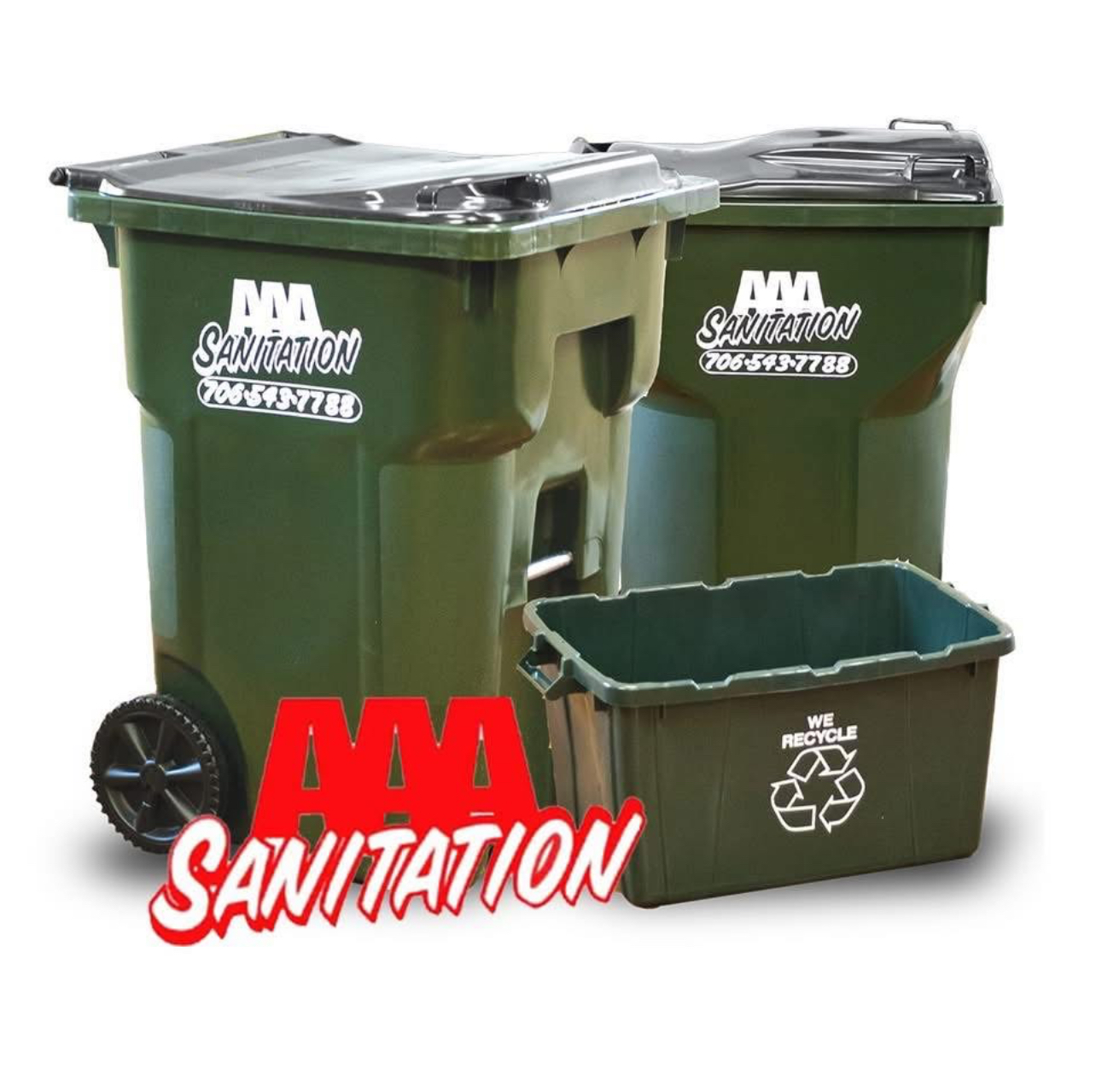
Athens, GA Cart Sizes & Set-Out Rules (What Commonly Applies)
In the Athens market, cart options and rules can vary by provider (and, for some addresses, by whether service is municipal or private). If you’re shopping around, these are the most common cart sizes you’ll hear quoted:
- Small: ~35 gallons (often used for low-volume households or tight storage areas)
- Medium: ~65 gallons (a common “middle” option)
- Large: ~95 gallons (for higher weekly volume or larger households)
Set-out constraints also vary by provider, but these are widely used curbside rules of thumb in many U.S. programs (confirm with your specific hauler or local guidelines):
- Lid-closed requirement: Many routes require the lid to fully close for safe automated pickup and to reduce litter/animal access.
- Overflow policies: Extra bags beside the cart may be refused, require bag tags, or require a scheduled extra pickup depending on the program.
- Weight limits: Carts can have maximum weight limits; dense loads (pet litter, dirt, wet debris) can exceed limits even if the cart isn’t full.
- Placement rules: Many providers ask for a few feet of clearance from mailboxes, cars, and other carts so the truck arm can grab it.
Practical Sizing Aid (Estimates)
Use the table below as a starting point, not a guarantee. These are estimates based on typical household trash patterns and assume you’re using 13-gallon kitchen bags for most waste. If you use larger 30–33 gallon bags, you may need fewer bags but more cart space per bag.
| Household / weekly output (estimate) | Typical weekly bag count | Suggested cart size (estimate) |
|---|---|---|
| 1 person, low packaging | 1–2 (13-gal) | ~35 gal |
| 1–2 people, average output | 2–4 (13-gal) | ~35–65 gal |
| 3–4 people, average output | 4–7 (13-gal) | ~65 gal |
| 4–5+ people, higher packaging / diapers | 7–10 (13-gal) | ~95 gal |
| Small business / office (light food waste) | Varies widely | Start ~65 gal, adjust after 2 weeks |
If your bags are consistently “fluffy” (lots of packaging) or you don’t break down boxes, size up sooner. If you recycle consistently and flatten cardboard, you can often size down.
The Real-World Costs of Picking the Wrong Cart
An under-sized cart tends to create recurring problems: extra bags beside the cart, torn bags from overstuffing, more odor, and more time spent “trash Tetris-ing” the night before pickup. It can also increase the chance that animals get into loose bags if anything is left outside the cart.
An over-sized cart has its own drawbacks. It can encourage people to toss items that could be recycled (depending on local acceptance rules), and it’s easier for trash to sit longer—especially if the cart is rarely filled. Bigger carts can also be harder to maneuver if you have steps, a steep driveway, or limited storage space near the house.
In both cases, the hidden cost is friction: more calls, more schedule questions, and more “why is this so annoying?” moments around pickup day.
Common Cart-Size Mistakes (Use This Checklist)
- Choosing based on one big cleanout: A garage purge is not your weekly baseline—consider a one-time special pickup instead.
- Ignoring bulky packaging: Shipping boxes and foam take up space fast; break down cardboard to avoid false “I need a bigger cart” signals.
- Overfilling until the lid won’t close: Besides the mess risk, it’s a strong sign your weekly capacity doesn’t match your household.
- Assuming all “bags” are equal: A 13-gallon kitchen bag and a larger contractor bag behave very differently in a cart.
- Forgetting about mobility: A larger cart that’s hard to roll is a weekly hassle you’ll feel in your shoulders.
- Not separating recyclables consistently: If you sometimes recycle and sometimes don’t, your trash volume will swing—and sizing becomes guesswork.
A Simple Action Plan to Pick the Right Cart
- Track two normal weeks: Count full kitchen bags and note any overflow or lid-lift moments.
- Measure your “bulky” factor: If you receive lots of deliveries, commit to breaking down boxes the same day they arrive.
- Set a lid-closed rule: Decide that everything must fit with the lid fully closed—then size the cart to match reality.
- Reduce volume before upsizing: Flatten cardboard, rinse and compress containers (where appropriate), and keep recyclables out of the trash when accepted locally.
- Create a plan for spike weeks: For move-outs, parties, or renovations, ask about extra pickup options rather than permanently increasing cart size.
- Re-evaluate after life changes: New roommate, new baby, or a home office can change weekly waste patterns—adjust your setup accordingly.
Professional Insight: A Simple Buffer Rule of Thumb (General Guidance)
A common rule of thumb is to choose a cart size that fits your typical week with a small cushion—enough room for an extra day or two of normal trash so you’re not forced to mash bags down to close the lid. For many households, that cushion is roughly the space of 1–2 additional 13-gallon kitchen bags, but the right buffer depends on how much packaging you generate and how consistently you recycle.
When It’s Time to Ask for Help
DIY sizing works for many households, but it’s smart to get help if any of these apply:
- You regularly have overflow: If bags end up beside the cart more than occasionally, your setup likely needs a change.
- The cart is hard to move safely: If rolling it to the curb feels like a workout you didn’t sign up for, consider a smaller cart and better volume control.
- You’re managing a rental or multi-tenant property: Multiple users can create inconsistent loads that are easier to solve with a clear plan and the right container mix.
- You have frequent bulky waste weeks: If packaging or cleanouts are common, ask about options that handle spikes without permanent oversizing.
- You’re unsure what belongs where: Local recycling acceptance rules vary—confirm what’s accepted so you’re not sizing based on avoidable trash volume.
Frequently Asked Questions
How do I know if my cart is too small?
If you often can’t close the lid, need to compress bags to make them fit, or end up placing extra bags outside the container, your capacity likely isn’t matching your weekly waste.
Is a bigger container always better?
Not always. Larger containers can be harder to roll, may take up more storage space, and can encourage trash to sit longer. The best fit is the smallest size that consistently holds your weekly trash with the lid closed.
Will recycling reduce how much trash capacity I need?
Often, yes—especially if you recycle cardboard and common containers. Results depend on your household habits and what your local program accepts, so confirm local guidelines and then track your weekly volume.
What should I do during move-out or renovation weeks?
Plan for extra volume ahead of time. Many people handle spikes with an extra pickup, a temporary solution, or staged disposal rather than permanently switching to a larger cart.
Can I estimate the right size without measuring anything?
You can get close by tracking how many full kitchen bags you generate in a normal week and noting whether bulky items (like boxes) are taking up most of the space. Two weeks of quick notes usually beats guesswork.
Your Next Steps
Trash cart size decisions are easier when you base them on real weekly volume, not a single messy week. Track your bag count, keep the lid-closed rule, and use recycling and box breakdown to control bulk before you upsize. If you still see overflow or the cart is tough to manage, it may be time to talk through options. A right-sized cart keeps pickup day simple—and keeps your curb from looking like it’s auditioning for a clutter documentary.