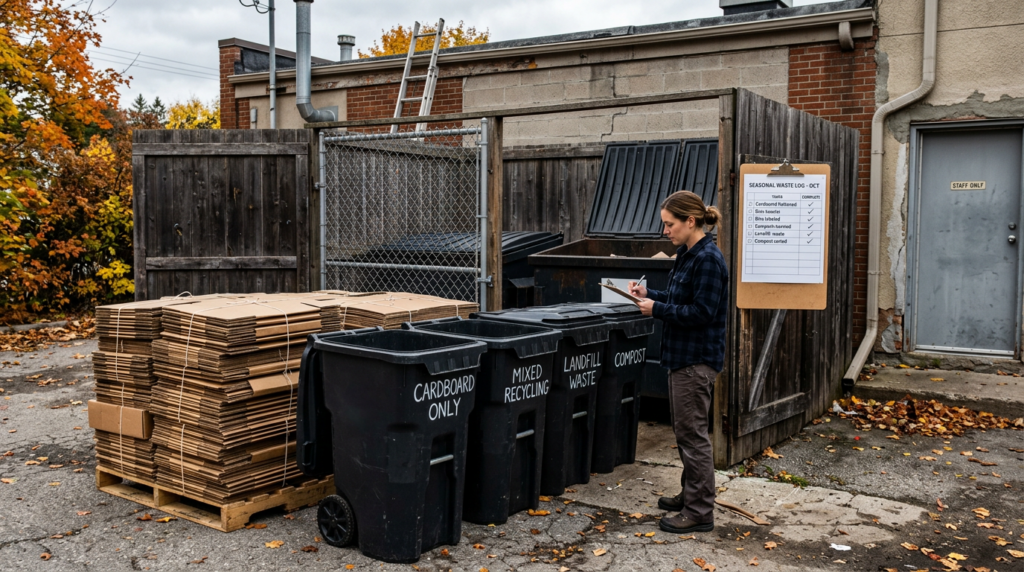
Seasonal dumpster planning gets trickier when your business has shifting foot traffic, changing inventory, and the occasional “why is there a mountain of boxes back here?” moment. If you manage a storefront, restaurant, office, or multi-tenant property in Athens, GA, small seasonal changes can create big waste swings—and that can lead to overflow, extra trips to the enclosure, or avoidable service calls. In Athens, fall and spring are common transition points: game-day weekends and campus-area traffic can change volumes quickly, landscaping and leaf cleanup can add debris, and end-of-season cleanouts can spike bulky waste. Getting a simple plan in place helps you keep the site clean, reduce surprise pileups, and communicate clearly with staff and tenants.
For service options and local support, you can start with AAA Sanitation & Garbage Removal.
Bottom Line Upfront: Seasonal Dumpster Planning
- Match dumpster size and pickup frequency to seasonal waste spikes (deliveries, promotions, cleanouts) instead of relying on “normal weeks.”
- Prevent overflow by separating cardboard and keeping lids closed—overflow can create pests, litter, and extra handling time.
- Set a simple “break down boxes” rule and assign responsibility by shift, not “whoever notices.”
- Use a short checklist for move-outs and cleanouts so bulky items don’t end up blocking access or violating provider rules.
- For apartment trash pickup, align tenant communication with container placement, bagging expectations, and a clear process for extras.
What’s Changing in Commercial Waste Right Now (and Why It Affects Your Containers)
Most dumpster problems don’t come from “industry trends”—they come from predictable operational triggers that change your waste volume or waste mix. If any of these show up on your calendar, your container plan usually needs a quick check:
- Inventory deliveries and restocks: More cardboard, pallets, and packing material.
- Promotions and seasonal menu/product changes: More customer traffic and more back-of-house prep waste.
- Renovations, resets, and cleanouts: Bulky items that don’t compact well and can block lids or gates.
- Staffing or schedule changes: Fewer hands for box breakdown and enclosure checks.
- Shared enclosures: One tenant’s surge can fill the container for everyone.
In Athens specifically, another practical factor is enclosure layout. Many commercial sites—especially near older buildings and tighter lots—have limited turning radius, narrow gates, or parking that can block service paths. Seasonal events can also change traffic and parking patterns, so it helps to keep the service approach clear and consistent.
The Mechanics of Seasonal Dumpster Planning (Size, Frequency, and Waste Type)
A workable plan has three moving parts: container capacity, pickup frequency, and what you’re putting in the dumpster. Most seasonal problems happen when one of those changes but the service setup doesn’t.
- Capacity: If your dumpster fills early in the week, you either need more volume or fewer “air-filled” items (like unbroken boxes).
- Frequency: Some businesses don’t need a larger container—they need an extra pickup during a known busy window.
- Waste type: Cardboard, food waste, and bulky items behave differently. Cardboard is the classic “takes up space fast” culprit; bulky items can block lids and access.
If you manage multi-tenant sites, add one more factor: who controls behavior. A solid plan includes signage, simple rules, and a process for exceptions (like move-out furniture). That’s where apartment trash pickup planning overlaps with commercial dumpster planning—shared spaces need shared expectations.
Apartment Trash Pickup Essentials for Seasonal Turnover
Even though this article focuses on businesses, some owners also manage mixed-use or multi-tenant properties. Seasonal turnover can create the same headache every time: extra bags, broken furniture, and overflowing dumpsters that turn into a “who did this?” mystery.
Apartment trash pickup runs smoother when you treat it like a system, not a suggestion. During high-turnover periods, apartment trash pickup plans often need temporary adjustments—either more frequent service, better staging rules, or both. If your tenants rely on apartment trash pickup, make sure your plan covers these practical points:
- Clear “extras” process: Define what happens when tenants have more than fits in the dumpster (who to contact, where to stage, what’s not allowed).
- Container access: Keep the approach clear so lids can open and trucks can service safely—blocked access can derail apartment trash pickup schedules.
- Bagging and containment: Loose trash invites litter and pests; set a consistent expectation for bagging and closing lids.
- Move-out bulk rules: Mattresses and furniture don’t belong in many standard setups; plan for special handling so apartment trash pickup areas don’t become a dumping ground.
The Real Business Costs of Overflow, Missed Timing, and Messy Enclosures
Waste issues rarely stay “in the back.” Overflow can create litter that migrates to customer-facing areas. A messy enclosure can slow down staff who need to take trash out repeatedly. And if dumpsters become inaccessible or overloaded, you can end up with extra handling or the need to reschedule.
Seasonal dumpster planning helps reduce operational friction in a few tangible ways:
- Time: Fewer trips to deal with overflow and fewer emergency cleanups.
- Safety: Less chance of slips, trips, and blocked walkways around the enclosure.
- Site appearance: Cleaner back-of-house areas reduce complaints from neighboring tenants and customers.
- Predictability: Better internal routines make it easier to coordinate with service providers and staff.
For apartment trash pickup, the stakes can be even higher because tenant behavior compounds quickly—one overflow weekend can turn into a week of piled bags if you don’t reset the system fast.
Common Dumpster Planning Mistakes Businesses Make (Use This Checklist)
- □ Waiting until the dumpster is already overflowing — By then, you’re reacting, not managing, and options can be limited.
- □ Throwing unbroken boxes straight in — Cardboard “air space” can cut effective capacity dramatically.
- □ Letting bulky items block lids — A blocked lid often leads to trash piling next to the container.
- □ Assuming tenants/staff “know the rules” — For shared sites and apartment trash pickup areas, unclear rules create inconsistent behavior.
- □ No plan for seasonal cleanouts — Inventory purges, office reorganizations, and move-outs need a defined process.
- □ Ignoring contamination risks — Mixing materials that don’t belong together can create handling issues; rules vary, so confirm locally.
A Practical Seasonal Waste Plan You Can Implement This Week
- □ Track “fullness” for two weeks — Have staff note the day the dumpster hits ~75% so you can spot patterns.
- □ Assign a cardboard routine — Make box breakdown part of closing duties; add a backup person per shift.
- □ Create a clean enclosure standard — Define what “clean” means (no loose bags, lids closed, access clear) and check it daily.
- □ Write a 5-sentence tenant/staff message — For apartment trash pickup and shared dumpsters: where to put trash, how to bag it, what not to leave, what to do with extras, and who to contact.
- □ Plan for bulky items — Identify a temporary staging spot that doesn’t block access, then arrange the right disposal method as needed.
- □ Confirm local rules for recycling and accepted materials — Policies vary by provider and area; verify what goes where before you post signage.
Professional Insight: The Small Habit That Prevents Most Overflow
A common high-impact habit is to treat the dumpster area like a scheduled station, not a last-minute task. Two simple routines tend to make the biggest difference for many businesses: (1) break down boxes before they go in, and (2) close lids after every use. These steps don’t guarantee you’ll never overflow, but they reduce “air space” waste, keep rain out, and make it easier to spot real capacity issues early—before a busy weekend, a delivery-heavy week, or a cleanout turns into a pileup.
When It’s Time to Ask for Help With Your Waste Setup
- Your dumpster is full days before service and staff are stacking bags beside it.
- Recurring litter or pest activity shows up around the enclosure despite regular cleanup.
- Access problems happen often (blocked lids, blocked gates, or vehicles parked in the service path).
- Seasonal surges are predictable (turnover, promotions, inventory resets) but you’re still getting caught off guard.
- Apartment trash pickup complaints increase because tenants don’t know where overflow or bulky items should go.
Common Questions Answered
How far ahead should a business plan for seasonal waste changes?
Start planning as soon as you can identify a predictable surge (like inventory changes, promotions, or tenant turnover). Even a simple two-week fullness log helps you choose the right adjustments.
What’s the fastest way to reduce dumpster overflow without changing service?
Enforce box breakdown and keep lids closed. Cardboard and loose trash are two of the most common causes of “it filled up way too fast” situations.
How can property managers reduce mess in shared dumpster areas?
Use clear rules, consistent enforcement, and a defined process for extras and bulky items. Shared areas work best when responsibilities are assigned and communicated in writing.
What should tenants do when apartment trash pickup areas are full?
They should follow the property’s posted overflow process (contact method and staging instructions). If there isn’t a posted process, the property manager should establish one to prevent dumping beside containers.
Do recycling and accepted materials rules stay the same everywhere?
No. Accepted materials and preparation rules vary by provider and local requirements, so confirm the current guidelines for your specific service before training staff or posting signage.
Where to Go from Here
Seasonal dumpster planning works best when it’s simple: anticipate your busy weeks, reduce “air space” waste like unbroken boxes, and set clear rules for shared areas. In Athens, GA, it also helps to plan around event-heavy weekends, seasonal landscaping debris, and tight enclosure access that can be affected by parking and traffic patterns. If you manage multi-tenant properties, tightening apartment trash pickup expectations can prevent the most common overflow and enclosure mess issues. A short checklist and consistent routines usually beat complicated policies that nobody follows.
Get in Touch
Fill out our quick form and we’ll get back to you within 24 hours.