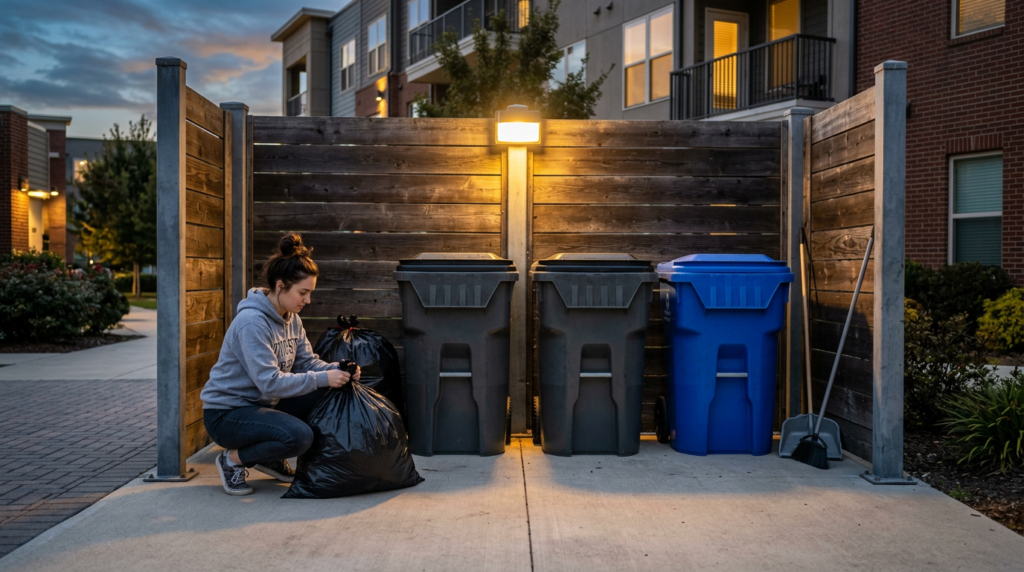
You’ll set up a simple routine for apartment trash pickup that prevents missed collections, reduces odor, and keeps shared areas from turning into a “trash Jenga” situation.
If you need help with service questions or options, start with AAA Sanitation & Garbage Removal for general info and the right contact path.
Prerequisites: What to Confirm Before You Start
- Your community’s set-out location: curb, enclosure, trash room, or dumpster area.
- Timing rules: what day/time to set out and when containers must be brought back.
- Container rules: bagging requirements, lid-closed expectations, and which bin is trash vs. recycling (if provided).
- Bulky item process: what counts as bulky and who approves special pickups (property manager vs. hauler).
- How updates are communicated: resident portal/app, email/text alerts, posted notices near the enclosure.
Apartment Trash Pickup Essentials for Students
Most student issues with apartment trash pickup come down to two things: unclear rules and inconsistent habits. Fix those, and the rest gets easier.
Screenshot checklist (60 seconds before you walk out):
- Set-out time window: within your community’s allowed hours (not early, not late).
- Bag tied: fully knotted; double-bag if it’s wet or messy.
- Lid closed: nothing sticking out; don’t “tent” the lid with boxes.
- Access clear: no bags blocking doors, gates, walkways, or tight turns.
- Cardboard flattened: break down boxes so they fit inside the right container.
- No liquids: drain first when possible to prevent leaks and odors.
- Use the exact designated drop spot: “Close enough” is how bags end up missed—or ripped open.
- Match the right material to the right container: keep trash and recycling separated if your community collects both.
- Do a 2-minute pre-trip check: tie the bag, close the lid, and make sure nothing can blow away.
- Control smells and pests: bag food waste securely and keep liquids out of the bin when possible.
- Report issues with specifics: building/unit, exact location, and what you observed (overflow, blocked access, damaged container).
Step-by-Step: How to Set Out Trash Correctly Each Week
-
Find the written rules (don’t rely on memory).
- Tip: Check your lease packet, resident portal/app, welcome email, or posted signs near the enclosure/dumpster.
- What you’re looking for: set-out spot, timing window, container/bagging rules, and what to do with bulky items.
-
Set up a “trash station” inside your apartment.
- Tip: Keep extra bags, disinfecting wipes, and a small box cutter/scissors in one place so taking trash out isn’t a scavenger hunt.
- Student-proof move: Put the supplies where the trash fills up (kitchen), not where you “wish” you’d store them.
-
Bag it like you mean it.
- Tip: Tie bags fully closed; double-bag messy food waste if needed.
- Why it helps: Fewer leaks means fewer odors, fewer pests, and fewer gross surprises on the way to the dumpster.
-
Break down cardboard before it leaves your unit.
- Tip: Flatten boxes so they don’t jam shared bins or block enclosure doors.
- Apartment reality: One unbroken “mega box” can steal all the space and make you unpopular fast.
-
Use the correct set-out location and keep access clear.
- Tip: Don’t place bags where cars, gates, tight corners, or closed doors make collection unsafe or impossible.
- Quick check: lid closes, nothing sticking out, and the pickup point isn’t blocked.
-
Handle a missed pickup in the right order.
- Tip: First re-check placement, timing, and access (blocked gate/parked cars/overflow).
- Then: report it to your property manager or hauler with your building/unit and the exact set-out location.
Why Timing and Setup Matter for Apartment Trash Pickup
Apartment trash pickup runs on routes and time windows. If trash is set out late, placed in the wrong spot, left loose, or blocked behind vehicles/gates, it can be skipped for safety or access reasons.
Consistent setup also prevents the student “greatest hits”: mystery smells in a small kitchen, pests showing up uninvited, and roommate debates that feel like a group project nobody asked for.
Common Mistakes That Cause Messes (and How to Avoid Them)
- Loose, unbagged trash: Bag it to prevent spills, leaks, and windblown litter.
- Overfilled bags or overflowing lids: Use an extra bag rather than forcing one to do the job of three.
- “Wish-cycling”: Don’t assume it’s recyclable—follow your community’s accepted-materials list.
- Blocking access: Keep pickup points clear of parked cars, closed gates, and tight turns.
- Dumping bulky items without approval: Ask first; bulky disposal often has separate instructions.
- Pouring liquids into the bin: Liquids leak, smell, and attract pests—drain first when possible.
Weekly Routine: A Simple Plan Roommates Can Actually Follow
-
Assign a schedule (and a backup).
- Tip: Use a rotating day assignment in a group chat note so it’s visible and boring—in the best way.
-
Do a “kitchen reset” the night before pickup.
- Tip: Tie bags, wipe drips, and take out anything smelly (meat/seafood packaging) before it marinates overnight.
-
Do the 3-check before you walk out.
- Tip: (1) bag tied, (2) lid closes, (3) nothing loose.
-
Document recurring problems once.
- Tip: If you’re seeing repeat overflow or access issues, write down dates and what you observed so you can report it clearly.
When to Ask Your Property Manager or Hauler for Help
Get help early if you notice:
- Repeated missed collections: after you’ve confirmed correct placement, timing, and clear access.
- Damaged or missing containers: cracked lids, broken wheels, or carts that disappear.
- Ongoing overflow: shared bins that are consistently full may require a service adjustment through property management.
- Unclear recycling instructions: request written guidelines to reduce confusion.
- Bulky item questions: ask before leaving furniture or large items near dumpsters/enclosures.
Examples of common rule conflicts (and what to do):
- Greasy pizza boxes in recycling: Many programs reject food-soiled cardboard. If your guidelines say “clean and dry only,” put greasy sections in trash and recycle only clean cardboard—or store it until you can confirm the rule.
- Loose glass in a recycling bin: Some communities require glass to be in a bin with a lid, in a separate container, or not accepted at all. If you don’t see glass listed, keep it contained (in a box/bag per your rules) and ask for written guidance before tossing it in.
- Unbroken boxes blocking lids: Even if cardboard is accepted, a lid that can’t close can lead to overflow, windblown litter, and missed service. Flatten it, cut it down, or store it until the next pickup if the bin is full.
- Overflow vs. “leave it next to the dumpster”: Some properties allow neatly stacked extras in a specific spot; others treat it as illegal dumping. If you’re unsure, the practical trade-off is storing it inside (or in your unit’s designated area) until the next pickup versus risking a violation—ask your property manager for the approved option.
Common Questions Students Ask About Apartment Trash Pickup
How do I figure out where to put trash in my apartment complex?
Check your lease packet or resident portal/app first, then confirm with the leasing office. Ask for the exact set-out location and any rules about bagging, lids, and timing for apartment trash pickup.
Can I leave boxes next to the dumpster if it’s full?
Follow your property rules. A safer default is to break boxes down and place them inside the correct container if space allows, or contact your property manager for the approved option.
What should I do if my pickup was missed?
First confirm the trash was placed in the correct location, within the allowed time window, and was accessible (not blocked by cars or gates). Then report it with details: building/unit area, exact set-out spot, and what was collected or not collected.
How can roommates keep trash from piling up?
Use a simple rotation and keep supplies stocked. A shared note with “trash out” days and a backup plan prevents overflow and last-minute scrambling.
Is it okay to put food liquids in the trash?
Liquids can leak and create odors. When possible, drain liquids first, then bag food waste securely to keep the container cleaner and reduce smells.
Expected Outcome: What Changes After You Follow This
With a consistent set-out spot, clear access, and a basic roommate routine, apartment trash pickup becomes predictable: fewer messes, fewer odors, fewer missed-collection headaches, and fewer “who was supposed to take it out?” arguments.
Book Your Consultation
Have a question about service options or recycling? Reach out to ask what’s available for your property.