Back-to-school season is when paper piles up, lunch supplies multiply, and “Where did all this packaging come from?” becomes a weekly mystery—making back-to-school recycling a practical way to keep your home (or workplace) from turning into a cardboard museum. This checklist is for parents, students, teachers, and local businesses who want clearer routines for sorting common school-year waste without overcomplicating it. The goal isn’t perfection—it’s consistency: fewer overflow bins, fewer “oops” items in the wrong container, and fewer last-minute trash panics on collection day. If you’re in Athens, GA, it also helps to align your habits with what your hauler accepts so your curbside setup stays smooth and predictable.
Before you start, it helps to understand the basics of what curbside collection typically includes and why certain items cause problems in the stream. This guide on how curbside garbage pickup works breaks down the process in plain language so your sorting decisions make more sense.
If you’re looking for a local option, you can also explore back-to-school recycling in Athens, GA to see how service can support a cleaner, easier routine during the school year.
The Essentials for Back-to-School Sorting
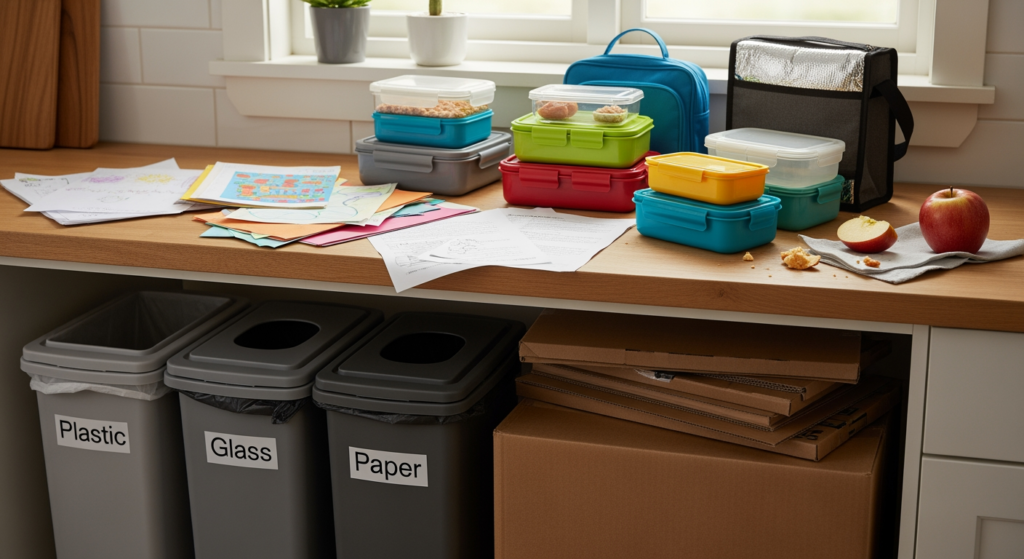
- ✓ Set up a simple “three-stream” station: trash, mixed recycling, and paper (if you separate it). Fewer decisions = better follow-through.
- ✓ Break down boxes early: flatten cardboard and keep it dry to reduce bin overflow and missed pickups.
- ✓ Keep food and liquids out: empty and quick-rinse containers when needed; contamination can reduce what’s accepted.
- ✓ Collect “special items” in a small tote: batteries, electronics, and odd materials should be handled through the correct drop-off program (rules vary by area).
- ✓ Label the bins: a one-second visual cue prevents “wish-cycling” (tossing items in recycling and hoping for the best).
How School-Year Waste Usually Breaks Down
Most school-season waste falls into a few predictable categories: paper (worksheets, flyers, notebooks), packaging (cardboard shipping boxes, plastic wrap), food and drink containers (snack packaging, bottles), and worn-out supplies (broken binders, dried markers). The trick is building a routine that matches the material.
In many curbside programs, clean paper and cardboard are the easiest wins, while mixed materials and “tiny stuff” are harder. For example, a plain cardboard box is straightforward, but a padded mailer, laminated paper, or a binder with mixed parts may need a different path. Because accepted items and preparation rules can vary, it’s smart to confirm what your specific provider and local program allow before you overhaul your system.
The Hidden Costs of Getting It Wrong (Time, Space, and Hassle)
When recycling is set up poorly, the “cost” shows up fast—usually as overflowing cans, extra bagging, and last-minute sorting on pickup day. Contamination (like food residue or liquids) can also turn a good-intentioned bin into a do-over, because mixed loads are harder to process.
For households, that often means more trips to the outdoor cart and more clutter in the garage. For teachers and offices, it can mean full classroom bins by midweek, mystery smells, and janitorial headaches. A small amount of structure—labels, a box-flattening habit, and a place for special items—typically saves the most time.
Common Back-to-School Recycling Mistakes to Avoid
- ✓ Tossing food-soiled paper in with clean paper: greasy or heavily soiled items may not be accepted; when in doubt, keep it out and confirm locally.
- ✓ Leaving liquids in bottles and cups: even small amounts can leak and contaminate other recyclables.
- ✓ “Wish-cycling” mixed materials: binders, laminated items, and multi-layer packaging can be tricky—don’t assume they belong in the cart.
- ✓ Forgetting to flatten cardboard: big boxes fill carts quickly and can lead to overflow.
- ✓ Putting small loose items in the bin: tiny pieces (caps, bits of plastic, broken pen parts) can be missed during sorting.
- ✓ Storing recyclables where they get wet: wet paper and cardboard can become unusable.
Your High-Priority Action Plan for a Cleaner School Year
- ✓ Do a 10-minute “supply audit” first: separate what’s reusable, what’s trash, and what’s potentially recyclable before it spreads across the house.
- ✓ Create one drop zone for paper: a tray or box for flyers, graded work, and mail prevents paper from migrating to every surface.
- ✓ Break down packaging immediately: keep a utility knife and a “flattened cardboard” stack near where deliveries land.
- ✓ Add a small container for special handling: collect batteries, old chargers, and small electronics for proper disposal through approved programs.
- ✓ Post a one-page “YES/NO” list by the bin: keep it simple and based on what your provider accepts.
- ✓ Build a weekly reset: choose one consistent day to empty classroom/office bins into the main cart and remove contamination.
Professional Insight: The Small Habit That Makes the Biggest Difference
In practice, we often see that the biggest improvement comes from reducing decision fatigue: one clearly labeled station, one place for paper, and one tote for “not sure” items. When people don’t have to guess in the moment, they’re far more likely to keep recyclables clean and carts manageable—even during busy weeks.
When It’s Time to Ask for Help
- ✓ Your cart overflows most weeks: a service adjustment or a better setup may be needed.
- ✓ You’re dealing with ongoing missed pickups or confusion: ask about schedules, set-out timing, and what’s accepted so expectations are clear.
- ✓ You manage a business, school group, or multi-tenant property: higher volume and shared bins usually benefit from a more structured plan.
- ✓ You have recurring “special items”: if batteries, e-waste, or unusual packaging is common, get guidance on proper handling options.
Your Questions, Answered
Do I need to rinse containers before putting them in the recycling?
Many programs prefer containers to be empty and reasonably clean. A quick rinse can help reduce odors and contamination, but requirements vary—confirm with your local provider’s guidelines.
What should I do with old notebooks and school papers?
Clean paper is commonly recyclable. Remove non-paper components when practical (like plastic covers or metal parts) and follow your provider’s accepted materials list.
Are padded mailers and bubble wrap okay for curbside bins?
These items are often treated differently than cardboard or rigid containers. If you’re unsure, set them aside and check local rules rather than guessing.
Where do broken binders, folders, and laminated items go?
These are frequently made from mixed materials that may not be accepted in standard curbside recycling. When possible, separate parts and confirm your area’s options for disposal or drop-off.
How can I get kids to follow the recycling system?
Make it visual and simple: labels, pictures, and a small bin placed where the waste actually happens (snack area, homework station). Consistency beats complexity.
Taking Action for a Less-Cluttered Routine
A school-year recycling setup works best when it’s easy to use on busy days: clear labels, fewer “maybes,” and a routine for boxes and paper. Start with the high-impact changes—flatten cardboard, keep food out, and create a spot for special items. If you’re managing multiple people or higher volume, a little structure up front can prevent weekly pileups. Keep your system flexible, and update your “YES/NO” list as you confirm what’s accepted in your area.
Want More Information?
Download our free resource to learn more about this topic.