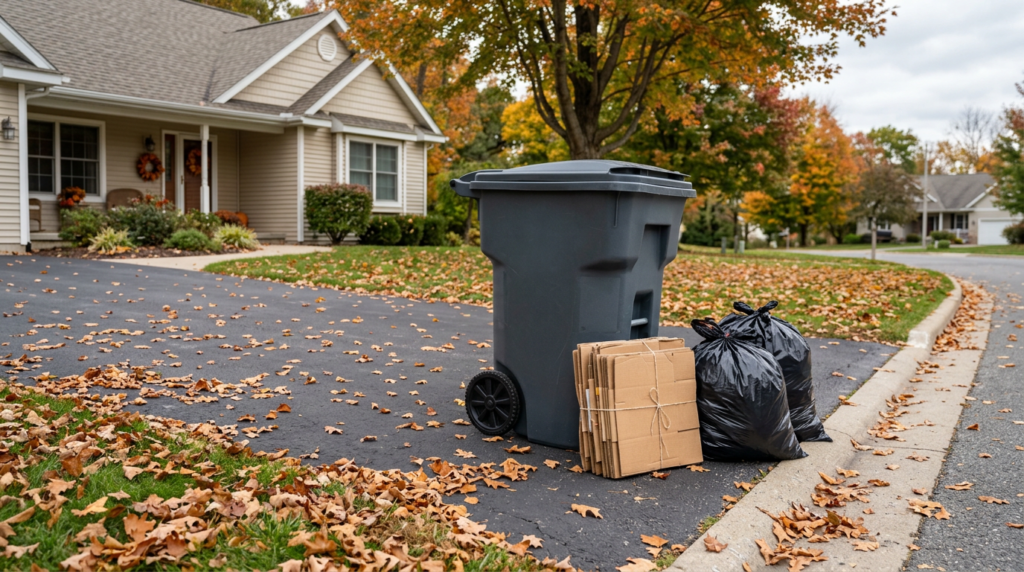
Fall cleanup can turn into a curbside mess fast if bags rip, lids won’t close, or “extra” piles get ignored. This fall cleanup trash set-out checklist is for homeowners who want a smoother pickup day, fewer surprises, and a cleaner curb line. It matters because set-out problems usually come down to a few fixable details: how you bag, how you bundle, what you keep out of the cart, and how you place everything at the curb. In autumn, yard debris and packaging waste tend to spike at the same time—so a little prep saves a lot of back-and-forth later. If you’re trying to avoid missed items, odors, or a driveway that looks like a raccoon buffet, the steps below will help you set things out clearly and responsibly.
The Essentials for a Clean, Clear Set-Out
- ✓ Bag it like it’s going to be lifted — Use sturdy bags and don’t overfill. If it’s too heavy for you to lift comfortably, it’s more likely to split or spill during handling.
- ✓ Keep the lid fully closed — An overstuffed cart invites litter, pests, and “mystery” debris in the street. If the lid can’t close, reduce volume or plan for approved extra options.
- ✓ Tie and seal smelly items — Double-bag food waste, pet waste, and anything damp. This helps reduce odors and leaks on the way to the truck.
- ✓ Make bundles obvious — If you’re setting out bundled items (like broken-down cardboard), keep them neat and contained so they don’t blow into the road.
- ✓ Separate questionable items — If you’re unsure about an item, don’t bury it in the cart. Set it aside and confirm disposal guidance first.
- ✓ Leave clearance around the cart — Place carts so they’re easy to access without obstacles like parked cars, mailboxes, low branches, or stacked piles.
How Fall Cleanup Set-Out Works (Without the Headaches)
A smooth set-out is mostly about containment, visibility, and access. Containment means everything is bagged, boxed, or bundled so loose debris doesn’t scatter. Visibility means your materials are easy to identify as trash (and not yard décor, building materials, or “maybe donations”). Access means placing your cart and any allowed extras where they can be handled safely and efficiently.
Athens-specific set-out checks (confirm with your provider/city before pickup):
- Set-out time window — Many routes require carts out by a certain morning time and brought back in after service. Check your provider/city’s published schedule and set-out rules for your address.
- Cart spacing and orientation — Some collection methods require space between carts and clear access from the street. Check whether your provider/city specifies spacing (for example, leaving room between carts and keeping handles/labels facing a certain direction).
- Brush, limbs, and yard debris rules — Yard debris may be handled differently than household trash (bag type, bundle size, whether limbs must be cut to a certain length, and whether piles must be separated from carts). Check your provider/city’s yard debris instructions before setting out leaves, brush, or limbs.
- Bulky item procedures — Mattresses, furniture, and large items often require scheduling, special placement, or prep steps. Check whether you need to call ahead, use tags, or follow a separate bulky pickup day.
- Recycling separation — If you use recycling service, keep recycling separate and follow the accepted-materials list and prep rules (flattening, rinsing, bag restrictions) provided by your hauler/city.
Why Set-Out Details Affect Time, Cost, and Cleanliness
Small set-out mistakes tend to create big downstream problems. Split bags mean litter and cleanup. Overfilled carts can lead to leftover waste sitting for another week. Wet, unsealed debris can leak and smell. And mixing “not accepted” items into regular trash can delay removal while you sort it back out.
From a homeowner perspective, good set-out habits usually mean:
- Less curbside mess — fewer spills, fewer windblown scraps.
- Fewer re-dos — less time dragging items back up the driveway.
- Lower risk of pests — sealed waste is less attractive to animals.
- Clearer communication — neat, separated materials are easier to identify and handle.
Common Fall Cleanup Set-Out Mistakes (Checklist)
- ✓ Overstuffing bags “to save trips” — Heavy bags tear at the worst moment. Use two manageable bags instead of one back-breaking one.
- ✓ Tossing loose debris into the cart — Loose leaves, small scraps, and packing fill can blow out. Bag or bundle to keep it contained.
- ✓ Mixing wet and dry waste — Wet yard debris with cardboard or paper can turn into a soggy brick. Keep wet items sealed separately.
- ✓ Putting prohibited or uncertain items in the pile — If you’re unsure, pause and confirm. Don’t assume unusual items belong in regular household trash.
- ✓ Blocking access — Carts jammed behind cars, under low branches, or wedged against obstacles are harder to service.
- ✓ Leaving food residue in containers — Sticky, unsealed waste attracts pests and creates odor. Bag it and tie it off.
Your High-Priority Set-Out Plan (Do This First)
60-second pre-set-out inspection (walk through this right before you roll the cart to the curb):
- ✓ Lid closes test — Close the lid fully without forcing it. If it won’t close, remove items until it does or use an approved overflow option (check with your provider/city).
- ✓ Weight check — If the cart or bags feel too heavy to move safely, split the load into smaller bags/containers. Heavy bags are more likely to tear and are harder to handle.
- ✓ Tie/seal check — Tug the knot on every bag. Double-bag damp or smelly waste (food, pet waste, soggy debris) to reduce leaks and odor.
- ✓ Clearance check — Make sure the cart has open space around it and isn’t blocked by parked cars, mailboxes, low branches, or stacked piles. Keep it stable and upright.
- ✓ Extras check — If you’re setting out bundles/boxes, keep them tight, neat, and easy to identify. Confirm whether extras must be in a specific spot (beside the cart vs. separate pile) with your provider/city.
Do not set out (set these aside and confirm the right disposal option instead):
- Hazardous or unknown chemicals — paint, solvents, pesticides, pool chemicals, automotive fluids.
- Sharps — loose needles, razor blades, broken glass in thin bags.
- Batteries and electronics — especially lithium batteries (fire risk) and devices that contain them.
- Hot ashes/charcoal — allow to cool completely and follow local guidance.
If you find any of the above during fall cleanup, check your provider/city’s disposal guidance (or local drop-off programs) before putting them in the cart.
Professional Insight: The Small Habit That Prevents Most Problems
A useful rule of thumb is to treat the curb like a loading zone: keep everything contained, clearly separated, and easy to grab without guesswork. That approach reduces torn bags, scattered debris, and leftover items—especially during fall cleanup when you’re dealing with more volume than usual.
When You Should Ask for Help Instead of Guessing
- ✓ You have items you can’t identify confidently — If you’re unsure what category something falls into, confirm before placing it out.
- ✓ Your cleanup produces more than your cart can hold — Ask about options for overflow rather than forcing the lid open or creating loose piles.
- ✓ You’re dealing with heavy, awkward objects — Large or sharp items can be unsafe to handle or may require special preparation.
- ✓ You’ve had repeated leftover items — If the same types of materials keep getting passed over, get clarity on preparation and acceptance rules.
Common Questions Answered
How do I keep my curb from turning into a windblown mess?
Bag small debris, tie bags securely, and bundle flattened cardboard. Avoid loose items that can scatter before pickup.
What should I do if my cart lid won’t close?
Remove material until the lid closes fully. If you still have overflow, check with your provider/city for approved extra options (scheduled pickup, tags, or a separate bulky/yard debris procedure).
Can I put damp leaves or yard debris in regular trash bags?
Many homeowners do, but acceptance can vary by provider and local rules. Keep damp material sealed and confirm what’s allowed for your service—especially for brush/limbs, which may have separate rules.
How should I handle sharp or broken items during cleanup?
Wrap sharp edges, use a rigid container when appropriate, and label or separate items if your provider requests it. Don’t leave exposed sharp pieces in thin bags. For needles or medical sharps, follow local disposal guidance rather than placing them loose in household trash.
What’s the simplest way to avoid missed items?
Do the 60-second inspection: lid closes, bags tied, items contained, and the cart placed with clear access. Keep unusual items separate so you can confirm the correct disposal method before set-out.
Taking Action Without Overthinking It
A clean set-out comes down to a few repeatable steps: close the lid, tie the bags, bundle the extras, and separate anything questionable. That approach keeps your curb neater and reduces the chance of leftover debris after pickup. If you want help confirming what’s accepted or how to prepare overflow from seasonal cleanups, reach out for details.
Want More Information?
For Athens set-out rules (time window, yard debris, bulky items, and recycling prep), use your provider/city’s published guidelines for your address. If you want help confirming what your service accepts and how to handle fall-cleanup overflow, get in touch.