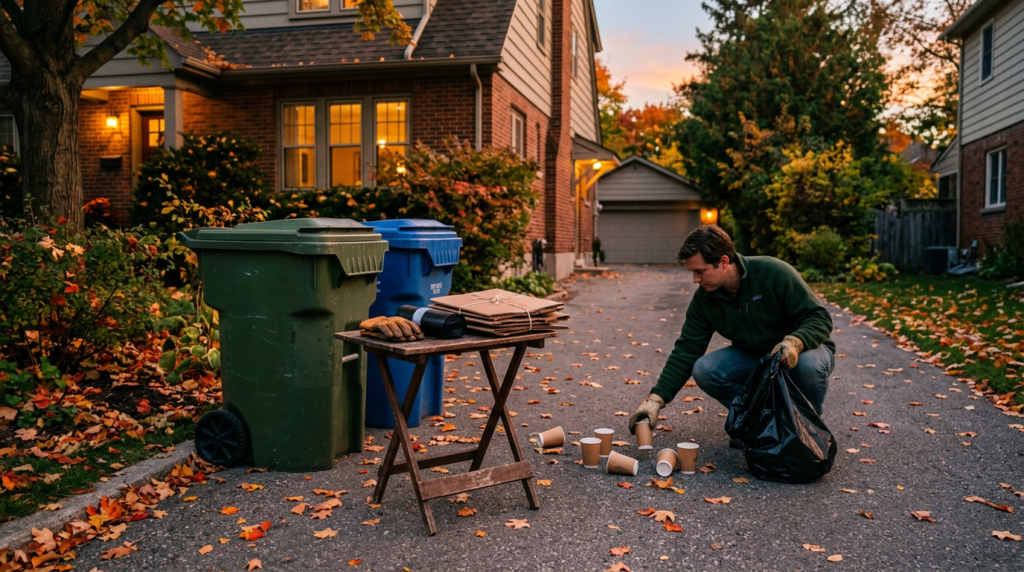
Game day is fun until your bins are overflowing, the driveway is dotted with cups, and your regular routine can’t keep up with the extra volume. If you’re hosting friends, renting out a place, or just living near the action in Athens, GA, a simple plan for game day trash pickup helps you avoid mess, odors, and last-minute bag runs. Fall is also prime time for tailgates and porch hangs, which means more food packaging and more “where did all this trash come from?” moments. The goal is straightforward: keep waste contained, keep recycling from getting contaminated, and make pickup day smooth for you and your hauler. For a quick refresher on how curbside service typically works, see Understanding Curbside Garbage Pickup: Processes and Benefits.
The Essentials for Game Day Cleanup
- Plan for 2–3x your usual bag volume if you’re hosting—set out extra liners and a backup can so trash doesn’t pile up on counters.
- Separate “wet” food waste from dry packaging to reduce odors and prevent soggy bags that rip on the way to the bin.
- Keep recycling clean and dry; one greasy pizza box or half-full drink can contaminate a whole batch.
- Stage bins early (the night before your normal pickup, if allowed locally) so you’re not dragging cans out mid-morning in a hurry.
- Use lidded containers outdoors to discourage pests and keep wind from turning your yard into confetti.
How Game Day Trash Pickup Works
The biggest difference on game day isn’t the trash itself—it’s the timing and the mix of materials. You’ll usually see more single-use items (cups, plates, napkins), more cardboard (snack boxes, beverage cases), and more food scraps. The smart approach is to “pre-sort” while people are still eating instead of trying to fix it all afterward.
Set up a small waste station with clear roles: one container for landfill trash, one for recycling, and one for food scraps (if you compost at home). If you don’t compost, double-bag wet food waste and tie it off before it goes into the main bin to reduce leaks and odors. If you’re placing bins at the curb, confirm your local rules—set-out times and accepted materials can vary by provider and community guidelines.
Why Timing Matters After the Final Whistle
Waiting “until tomorrow” can turn a manageable cleanup into a smelly, scattered problem—especially with leftover food and sticky drink containers. Odors build fast, bags get heavier, and wildlife or neighborhood pets may become very interested in your bin lids.
There’s also a practical curbside issue: overfilled carts can lead to lids that won’t close, loose trash that blows out, or bags that tear when moved. Even if your pickup still happens on schedule, messy set-outs can create a bigger cleanup for you later. A quick, disciplined post-game reset usually saves time and keeps your property looking normal again.
Common Game Day Cleanup Mistakes
- Stuffing bins until the lid won’t close: Overfilled carts can spill, attract pests, and make handling harder.
- Putting liquids in trash or recycling: Dump cups and bottles first; liquids cause leaks and can spoil recyclables.
- “Recycling” greasy food packaging: Grease and food residue can contaminate otherwise recyclable loads.
- Leaving bags outdoors overnight: Animals, wind, and moisture can turn one bag into a yard-wide problem.
- Skipping liners for party cans: Unlined cans get sticky fast and become odor traps.
- Forgetting glove-and-grab tools: Picking up bottle caps and napkins by hand is a bad use of your weekend.
Game Day Trash Pickup Action Plan
- Before guests arrive: Place one trash can where food is served and one where drinks are served; add clear bag liners.
- Label containers simply: “Trash” and “Recycling” is enough—clarity beats creativity.
- Set a “box breakdown” spot: Flatten cardboard as you go to save bin space.
- Keep a small cleanup kit ready: Extra bags, gloves, paper towels, and a grabber tool in a tote near the door.
- After the game: Do a 10-minute sweep—collect food waste first, then cups/plates, then small litter.
- Bag wet waste separately: Tie it off tightly before it goes into the main cart to reduce leaks and smells.
- Rinse sticky recyclables if practical: A quick rinse and shake-dry helps keep recycling cleaner (follow your local guidance).
- Secure lids and close the loop: Make sure carts close fully and move them to the proper set-out area for your next pickup.
The One Move That Prevents Most Messes
In practice, we often see that the biggest cleanup headaches come from mixing food waste with lightweight packaging too early—once it’s soggy, it tears bags, leaks in carts, and smells stronger. Keeping “wet” waste contained and tied off separately is a small step that usually makes the rest of the cleanup faster and cleaner.
When It’s Time to Get Help With Overflow
Consider professional support if any of these apply:
- Your trash volume regularly exceeds your cart capacity after hosting or renting.
- You have recurring litter issues from wind, wildlife, or shared outdoor spaces.
- You’re dealing with persistent odors even after bagging and basic rinsing.
- You need a clearer plan for sorting and set-out to avoid missed pickups or contamination problems.
Frequently Asked Questions
How can I reduce trash volume during a big watch party?
Use larger drink dispensers instead of individual bottles, set out a dedicated recycling bin, and break down cardboard as you open items. Fewer bulky packages means more room in your cart.
What should I do with leftover food and messy plates?
Scrape food into a separate bag, tie it off tightly, and place it in the main trash cart. Keep liquids out of bags to reduce leaks and odor.
Why do recyclables get rejected sometimes?
Common reasons include food residue, liquids, and non-accepted materials mixed in. Follow your local program’s accepted-items list and keep recycling clean and dry.
Is it okay to put extra bags next to the cart?
That depends on local rules and your service provider. Some services require everything to fit inside the cart with the lid closed, while others allow limited extras—confirm your specific guidelines.
Taking Action After Game Day
A little planning keeps your home from feeling like a stadium concourse the morning after. Set up simple sorting, manage wet waste separately, and stage bins the right way for your normal pickup routine. If you host often, a repeatable cleanup system is easier than a once-a-season scramble. When you want help dialing in a smoother approach, reach out and talk through options.
Schedule a free consultation with our experts.