
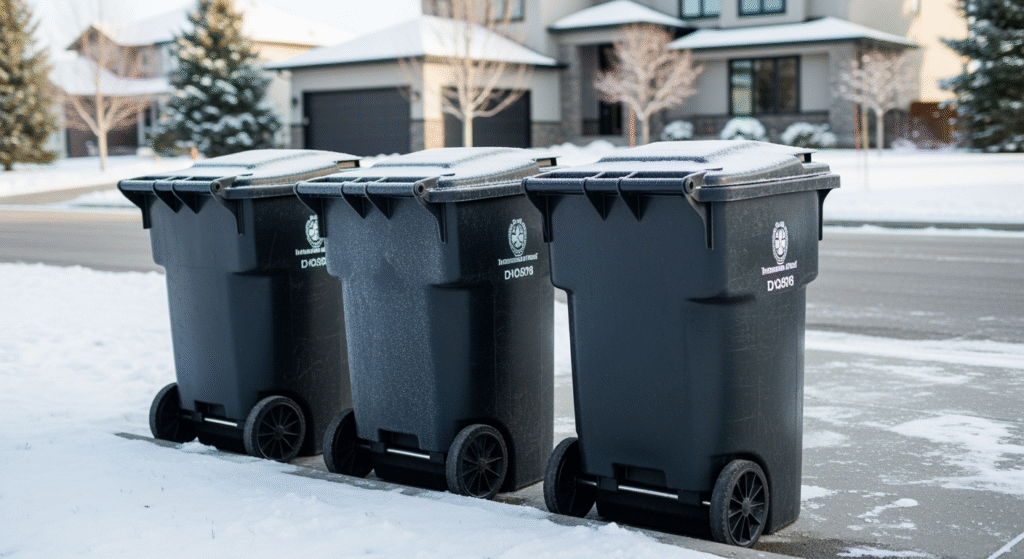
Trash smells can still build up in cold weather, especially when bags sit longer indoors, bins stay closed tight, and food scraps linger between pickup days. This guide is for homeowners who want a practical, low-effort routine for trash odor control winter—without overcomplicating their daily schedule. Keeping odors down matters for comfort, pest prevention, and avoiding messy bin cleanups that are harder to deal with when it’s cold outside. During the winter months, it also helps to plan ahead so you’re not stuck with a smelly can in the garage or near the back door. The steps below focus on storage, bagging, bin care, and smarter set-out timing so your household trash stays as low-odor as possible.
If you want a quick refresher on what happens after you roll your cart to the curb (and why set-out timing matters), see Understanding Curbside Garbage Pickup: Processes and Benefits.
What You Need to Know First for Winter Odor Control
- Odors come from moisture + food residue + time—cold slows bacteria, but it doesn’t stop it.
- Wet trash is the biggest culprit; keeping liquids out of bags reduces smell and leaks.
- Double containment works: a tight kitchen bag plus a reasonably sealed cart reduces odor spread.
- Set-out strategy matters; putting trash out too early can create longer “stink time” near your home.
- Regular, small maintenance beats occasional deep cleaning when temperatures are low.
How Trash Odor Control Winter Works (Even When It’s Cold)
Odor is mostly caused by decomposition and off-gassing from food scraps, packaging residue, and liquids trapped in a warm, low-ventilation environment—like a kitchen can, garage bin, or tightly closed cart. Winter temperatures can slow bacterial growth, but trash often warms up indoors before it goes outside. Once it’s in the bin, smells can concentrate because carts are designed to be durable and closed, not ventilated.
Effective winter odor control is about reducing the “fuel” for smells (liquids and food residue), limiting how long waste sits, and keeping the container surfaces cleaner so odors don’t cling to the plastic.
Why Timing and Storage Choices Change Your Results
Small choices—like where you store the cart, how long food waste sits in the kitchen, and when you roll the bin out—can affect how noticeable odors become. If trash sits for extra days (common around travel, busy weeks, or missed routines), smells have more time to build. Leaks also tend to spread odor: once liquid hits the bottom of a cart, it can soak into grime and keep smelling even after the bag is gone.
From a cost and effort standpoint, preventing odor is typically easier than trying to “fix” a cart that has absorbed smells. It can also reduce the chance of attracting animals that investigate carts for food residue.
Common Winter Trash Odor Mistakes (Checklist)
- Throwing liquids into the bag (coffee, soup, melted ice): increases leaks and odor buildup at the bottom of the cart.
- Skipping bag ties or overfilling bags: leads to small tears that release odors and create residue in the bin.
- Putting loose food scraps directly into the kitchen can: food residue sticks to the can and lid and smells faster.
- Letting “rinseable” containers sit unrinsed: even small residue in jars, trays, or cans can stink over time.
- Storing the cart in a warm, enclosed area: warmth speeds odor formation and concentrates smells.
- Setting the cart out too early: extends the time odors sit near doors, driveways, or walkways.
Your Step-by-Step Plan to Reduce Household Trash Smells
Prerequisites: trash bags that fit your kitchen can, a few grocery/produce bags or small liners for food scraps, paper towels or newspaper, and basic cleaning supplies (dish soap or mild cleaner). Optional: baking soda.
-
Start by separating “high-odor” waste at the source.
Tip: Put meat packaging, seafood scraps, and strong-smelling leftovers into a small bag/liner first, tie it off, then place it in the main bag. If you have freezer space, consider keeping a sealed bag of high-odor food waste in the freezer until closer to pickup day.
-
Keep liquids and wet items out of the trash bag.
Tip: Drain foods well, let greasy pans cool and wipe them with a paper towel, and use a little paper towel/newspaper in the bag to absorb moisture. Less moisture usually means less smell and fewer leaks.
-
Use the right bag size and close it correctly.
Tip: Don’t stretch a too-small bag to fit; it tears more easily. Tie bags securely and avoid packing sharp items against the plastic. If something is messy, double-bag that item rather than the whole load.
-
Do a quick “lid-and-rim” wipe on your kitchen can.
Tip: Odors often cling to the underside of lids and the rim where hands touch. A fast wipe once or twice a week can make a noticeable difference without a full wash.
-
Line the bottom of the outdoor cart to prevent stink residue.
Tip: Place a folded piece of cardboard or a few layers of newspaper at the bottom to catch minor drips. Replace it as needed. If a leak happens, clean it sooner rather than later so residue doesn’t linger.
-
Choose a smarter storage spot for the cart.
Tip: If possible, store the cart in a cooler, ventilated area rather than a warm, enclosed space. Keeping it out of direct sun (when applicable) and away from doors can reduce how noticeable any lingering odor is.
-
Time your set-out to shorten odor exposure.
Tip: Put the cart out as close to your collection window as practical for your household routine. If local rules or schedules apply, confirm what’s allowed in your area since set-out times can vary.
-
Refresh the cart with a simple deodorizing routine.
Tip: After pickup (when the cart is empty), sprinkle a small amount of baking soda in the bottom or use a light soap-and-water rinse if conditions allow. Let it dry with the lid open briefly (when safe and practical) before closing.
Professional Insight: The Small Habit That Usually Makes the Biggest Difference
In practice, we often see that the biggest improvement comes from controlling moisture—especially from food containers and leaky bags. When households focus on draining, wiping, and securely tying bags (instead of trying stronger fragrances or heavy cleaners), carts tend to stay noticeably fresher with less effort.
When It’s Time to Get Help With Ongoing Odor or Overflow Issues
- You consistently have overflow and bags sit around waiting for space in the cart.
- Your cart has persistent odor even after basic cleaning, suggesting residue buildup or repeated leaks.
- You’re dealing with repeated animal interference that scatters trash or damages bags.
- Your household volume has changed (new tenants, renovation, business-from-home) and your current setup no longer fits.
- You’re unsure what belongs in trash vs. recycling and contamination is causing mess or odor.
Common Questions Homeowners Ask About Winter Trash Smells
Does cold weather eliminate garbage smells?
Cold can slow down decomposition, but it doesn’t eliminate odor. Trash often warms up indoors first, and smells can concentrate inside closed cans and carts.
What’s the simplest way to reduce food-related odors in the bin?
Bag high-odor scraps separately, keep liquids out, and tie bags securely. A quick wipe of the kitchen lid and rim also helps prevent lingering smells.
Is it okay to use baking soda in an outdoor cart?
Many households use a small amount to absorb odors. Avoid overusing powders that could clump with moisture, and prioritize preventing leaks and residue first.
Should I rinse containers before throwing them away?
If a container has strong residue (like dairy, meat juices, or sauces), a quick rinse or wipe can reduce odor. Let it drain so you’re not adding liquids to the bag.
How can I avoid smells if pickup isn’t for several days?
Freeze or tightly bag food scraps, keep trash as dry as possible, and take small “high-odor” bags out to the cart as they’re created rather than letting them sit indoors.
Taking Action to Keep Winter Trash Odors Manageable
Keeping odors down is mostly about reducing moisture, containing food waste, and limiting how long trash sits in warm indoor spaces. A few small habits—better bagging, quick wipe-downs, and smarter set-out timing—can make your home feel cleaner and your cart easier to manage. If you’re still fighting recurring smells or frequent overflow, it may be time to adjust your service approach and container setup.
Book Your Consultation
Schedule a free consultation with our experts.