
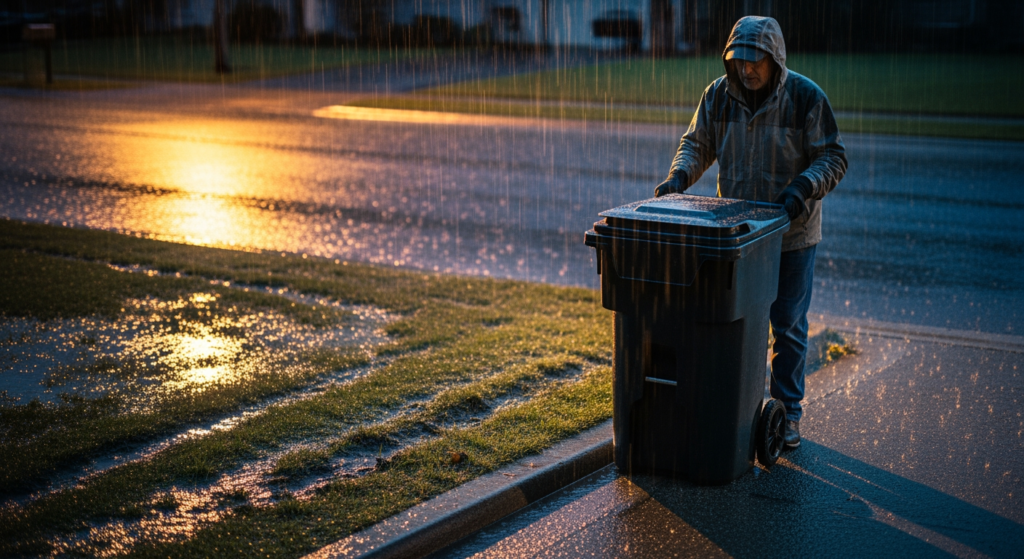
Missed pickups are frustrating—especially when rain turns driveways into mud or freezing nights make lids stick and bags tear. If you’re a homeowner trying to keep your curbside service consistent, a few set-out and access habits can make a real difference. This guide focuses on missed trash pickup prevention steps you can control: where you place carts, how you protect bags, and how you keep collection points reachable when conditions get messy. As spring brings more wet ground and changing temperatures, it’s a good time to reset your routine so your materials are easier to collect and less likely to be skipped due to access or safety constraints.
For a simple overview of how curbside collection typically works (and what crews need in order to service a stop), see Understanding Curbside Garbage Pickup: Processes and Benefits.
Quick Facts for Missed Trash Pickup Prevention
- Prioritize access: If the cart isn’t safely reachable (mud, ice, blocked path), it may not be serviceable that day.
- Stabilize the set-out spot: Place carts on firm, level ground to prevent tipping, sliding, or sinking.
- Control moisture: Use sturdy bags, tie them securely, and keep lids fully closed to reduce waterlogged, torn loads.
- Prevent freeze-lock issues: Keep lids and hinges free of stuck debris so they open normally after cold nights.
- Give clearance: Leave space around the cart so it can be handled without hitting cars, mailboxes, or other carts.
How Rain, Mud, and Freezing Nights Disrupt Collection
In bad weather, the most common causes of a missed stop are access and handling problems—not the amount of trash. Wet ground can swallow wheels, tilt carts, or make curb areas unstable. Mud and soft shoulders can limit where a truck can safely stop, and a cart placed too far off a firm surface can be difficult to roll or lift without risk.
Freezing nights add a different set of issues. Lids can freeze shut if moisture collects around the rim. Bags can freeze to the bottom of the cart, making it hard for materials to empty out. Even when temperatures rise, partially frozen contents can stick together and come out in clumps, leaving leftovers behind.
Why Timing and Access Matter in Bad Weather
Weather-related delays can create a domino effect: if your cart isn’t accessible when the route reaches your street, it may not be possible (or safe) to circle back later. That can mean holding extra material until the next service day, dealing with odors, or needing to re-bag torn items.
There’s also a practical cost to messy set-outs: waterlogged trash is heavier, and heavier loads are more likely to split bags or jam in carts. A few minutes of preparation can reduce cleanup and help your materials go out smoothly even when conditions are rough.
Common Set-Out Errors That Lead to Skipped Stops (Checklist)
- Placing carts in mud or soft ground: Wheels sink, carts tip, and crews may not be able to move them safely.
- Blocking the cart with cars or obstacles: Tight spacing can prevent safe handling and quick servicing.
- Overfilling or forcing the lid open: Rain gets in, contents swell, and items may fall out during handling.
- Loose bags or untied liners: Wind and water increase tearing and litter, creating extra cleanup.
- Letting items freeze to the cart: Wet materials can stick overnight and may not empty fully.
- Setting out unstable piles beside the cart: Loose items can blow into the street or become unsafe to collect.
Smart Set-Out and Access Tips for Rough Conditions (Checklist)
- Choose a firm, level placement: Put carts on pavement or a stable edge that won’t rut or sink after rainfall.
- Keep the lid fully closed: This limits water intrusion and helps prevent heavier, split bags.
- Double-bag wet or heavy waste: Use stronger bags and tie them tightly to reduce tearing.
- Create clearance on all sides: Leave enough space so the cart can be rolled and handled without bumping obstacles.
- Reduce freeze-stick: Keep the cart reasonably dry inside; avoid pouring liquids into bags and keep soggy items contained.
- Break up compacted contents: If material is packed tight (or partially frozen), gently loosen it before set-out so it empties more completely.
- Secure lightweight items: Use lidded containers or bagged bundles so wind doesn’t scatter recyclables or trash.
- Do a quick access walk: Confirm the cart is reachable without crossing slick patches or deep mud.
Professional Insight: The Small Access Detail People Miss
In practice, we often see that the difference between a smooth pickup and a missed one comes down to a few inches of placement—carts set just off the firm surface can look “close enough,” but after rain they may settle into soft ground and become difficult to move safely.
When You Should Ask for Help Instead of Guessing
Consider reaching out for guidance if any of these situations keep happening:
- Repeated weather-day misses: If it happens more than once, your set-out location or access path may need adjustment.
- Your curb area floods or turns to deep mud: You may need an alternate placement that stays stable and reachable.
- Carts frequently tip or roll: A different set-out surface, spacing, or orientation can help.
- Frozen contents regularly stick inside: Changing how you bag and load materials can reduce leftovers.
- You’re unsure what can be collected: Rules can vary by provider and area, so it’s better to confirm than risk non-collection.
Frequently Asked Questions About Weather-Day Pickups
Where should I place my cart when the ground is muddy?
Use the most stable, level surface available—typically pavement or a firm driveway edge—so the wheels don’t sink and the cart can be moved safely.
How can I keep trash bags from getting soaked in heavy rain?
Use sturdy bags, tie them securely, and keep the cart lid fully closed. Avoid overfilling so the lid can shut completely.
What should I do if items freeze to the bottom of the cart overnight?
Before set-out, gently loosen stuck materials with a tool you can safely use, and avoid putting loose liquids into the cart. Keeping contents bagged and tied helps reduce sticking.
Is it okay to leave extra bags next to the cart during bad weather?
Loose bags can tear, blow away, or become waterlogged. If you must set out additional material, keep it contained and secured so it’s safe to handle and less likely to create litter.
Do collection rules change during storms or freezing conditions?
Policies and service decisions can vary by provider and local conditions. If you’re unsure, confirm directly with your service provider for the most accurate guidance.
Taking Action Before the Next Weather Swing
Bad weather doesn’t have to mean a missed stop. Focus on stable placement, clear access, and keeping materials contained and dry so they’re easier to collect. A quick pre-set-out check—firm ground, closed lid, enough clearance—can prevent many common problems. If you’re still seeing inconsistent service during rough conditions, it may be time to adjust your set-out approach or ask for guidance.
Book Your Consultation
Schedule a free consultation with our experts.