
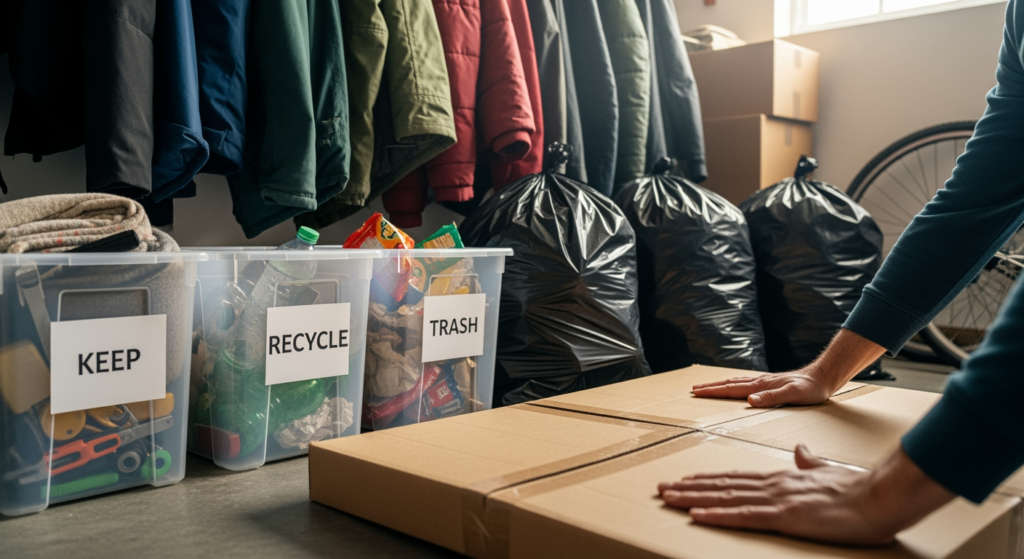
Late winter is a practical time to reset your home before spring routines kick in, but clutter can turn into a confusing mix of trash, recyclables, and “maybe later” items. This winter decluttering checklist is for homeowners who want a clear, low-stress way to sort what to toss, what to recycle, and how to plan for the extra bags and boxes that don’t fit in a normal week. Done well, decluttering helps you avoid overflow, reduce odors, and keep walkways and storage areas safer and easier to use. It also helps you make better decisions about donation, recycling, and disposal—without guessing what goes where. If you use curbside service, a little planning up front can prevent last-minute pileups and missed pickups in Athens, GA.
For a simple refresher on how curbside service typically works (and what to expect), see Understanding Curbside Garbage Pickup: Processes and Benefits.
The Essentials: Late-Winter Sort-and-Set Checklist
- ✓ Start with a 3-pile system: keep, recycle, trash—use clearly labeled bags/boxes to prevent re-sorting later.
- ✓ Separate “bulky” early: broken furniture, large boxes, and old storage bins can exceed normal cart space.
- ✓ Break down cardboard as you go: flattening boxes reduces volume fast and keeps recycling manageable.
- ✓ Don’t assume every plastic is recyclable: rules vary by provider; check locally before putting questionable items in the bin.
- ✓ Plan for overflow: estimate extra bags/boxes and decide whether you need additional capacity or a special pickup.
How a Late-Winter Declutter Typically Works (Without Making a Bigger Mess)
The most effective approach is to declutter in “zones” and handle materials immediately—rather than creating one giant pile that lingers for days. Start with high-impact areas where clutter builds up in winter: entryways, closets, garages, and storage rooms. As you work, you’ll usually see the same categories repeat: shipping boxes, packaging, worn textiles, broken household items, and outdated pantry goods.
To keep decisions simple, use one rule: touch it once. When you pick up an item, decide its destination (keep/recycle/trash/donate) and place it there right away. If you’re unsure, create a small “review later” bin with a deadline for re-checking—so it doesn’t become a new clutter hotspot.
The Real Impact: Space, Odors, and Overflow After a Big Cleanout
Decluttering often creates more waste volume than people expect, especially when you finally empty closets or consolidate storage. The practical stakes are straightforward:
- Time: If items aren’t sorted correctly, you may spend extra time re-bagging, breaking down boxes, or retrieving rejected materials.
- Cost: Overflow can lead to extra service needs (like additional pickup capacity) depending on your provider and local rules.
- Safety: Piles in garages and hallways increase trip hazards and can block access to stored essentials.
- Sanitation: Food-contaminated packaging and damp textiles can create odors if they sit too long.
If you’re decluttering across multiple rooms, plan your disposal route before you start: where bags will be staged, how recyclables will be kept dry, and when items will go out for collection.
Common Late-Winter Decluttering Mistakes (Checklist of What NOT to Do)
- ✓ Don’t “wish-cycle” questionable items: Putting non-accepted materials in recycling can contaminate the load. When in doubt, confirm local acceptance rules.
- ✓ Don’t leave cardboard unflattened: Whole boxes fill carts quickly and can crowd out other recyclables.
- ✓ Don’t bag recyclables unless your provider allows it: Some programs require loose items; bagged recycling may be treated as trash.
- ✓ Don’t toss liquids or wet materials into the bin: Leaks and soggy waste can create odors and make handling harder.
- ✓ Don’t mix donation-quality items with trash: Keep a separate “donate” box so usable items don’t get damaged or contaminated.
- ✓ Don’t underestimate overflow: If you’ll exceed your usual capacity, decide early how you’ll handle the extra volume.
Your Winter Decluttering Checklist: Smart Action Steps for Sorting, Recycling, and Extra Trash
- ✓ Pick 2–3 zones to finish (Priority: High): Entryway + one closet + garage corner is often more realistic than “the whole house.”
- ✓ Set up supplies first (Priority: High): Heavy-duty trash bags, a box cutter, gloves, labels, and a dedicated recycling container.
- ✓ Create a “recycling staging” spot (Priority: High): Keep recyclables dry and together so they don’t end up trashed at the last minute.
- ✓ Break down and bundle cardboard (Priority: High): Flatten boxes immediately; keep them stacked neatly to prevent re-expanding clutter.
- ✓ Separate food-contaminated packaging (Priority: Medium): If a container is greasy or has food residue, local guidance may require trash—confirm rules.
- ✓ Plan your overflow before collection day (Priority: High): Count bags/boxes and decide whether you need extra capacity, a second round, or professional help.
- ✓ Keep pathways clear (Priority: High): Maintain a walking lane in garages and halls so the project doesn’t create a safety issue.
- ✓ Do a final 10-minute sweep (Priority: Medium): Tie bags, close boxes, and verify items are in the correct pile before moving them to the curb.
Professional Insight: The Small Step That Prevents Most Overflow
In practice, we often see decluttering go sideways when everything gets piled together “just for now.” The projects that stay manageable usually have one thing in common: homeowners set up sorting stations first and keep cardboard broken down from the start—two habits that dramatically reduce the space clutter takes up while you work.
When It’s Time to Call for Help With Extra Waste
Consider professional support if any of the following apply:
- ✓ You have more volume than your normal weekly service can handle: Multiple rooms’ worth of bags/boxes often requires a plan beyond standard capacity.
- ✓ You’re dealing with bulky items: Large, awkward pieces can be difficult to move and may require special handling or scheduling.
- ✓ You can’t stage materials safely: If piles block walkways, exits, or parking areas, it’s a good time to get help.
- ✓ You’re unsure what’s accepted for recycling: When local rules vary, getting guidance can prevent contamination and rework.
Common Questions Answered
How do I decide what to keep versus toss during a seasonal cleanout?
If you haven’t used it in a full season cycle and it’s easy to replace, it’s often a good candidate to donate or dispose of. Focus on freeing space in high-traffic areas first, then revisit sentimental items last.
Can I put all cardboard in the recycling bin?
Many programs accept clean, dry cardboard, but acceptance can vary by provider and local guidelines. Flatten boxes and keep them free of food residue, then confirm what your local program allows.
What should I do if I have more trash than fits in my cart?
Start by estimating how many extra bags you’ll have and whether you can reduce volume by consolidating and breaking down boxes. If you still have overflow, check your service options for additional capacity or an extra pickup.
Should I bag recyclables before putting them out?
Some curbside programs prefer loose recyclables, while others allow specific bagging methods. Because rules differ, follow your local provider’s guidance to avoid recyclables being treated as trash.
Is it okay to recycle items that are dirty or greasy?
Food-contaminated materials may not be accepted in many recycling programs. If you can’t clean and dry the item quickly, confirm local rules—some materials may need to go in the trash to avoid contaminating other recyclables.
Taking Action
A late-winter cleanout is easier when you sort in real time, keep cardboard under control, and plan for extra volume before it becomes a curbside problem. Use the checklist to move zone by zone, keep recyclables clean and separated, and stage everything safely. If you expect overflow or bulky items, it helps to decide early whether you’ll need additional support. With a little structure, you can finish the project without turning your home into a temporary storage unit.
Want More Information?
Download our free resource to learn more about this topic.