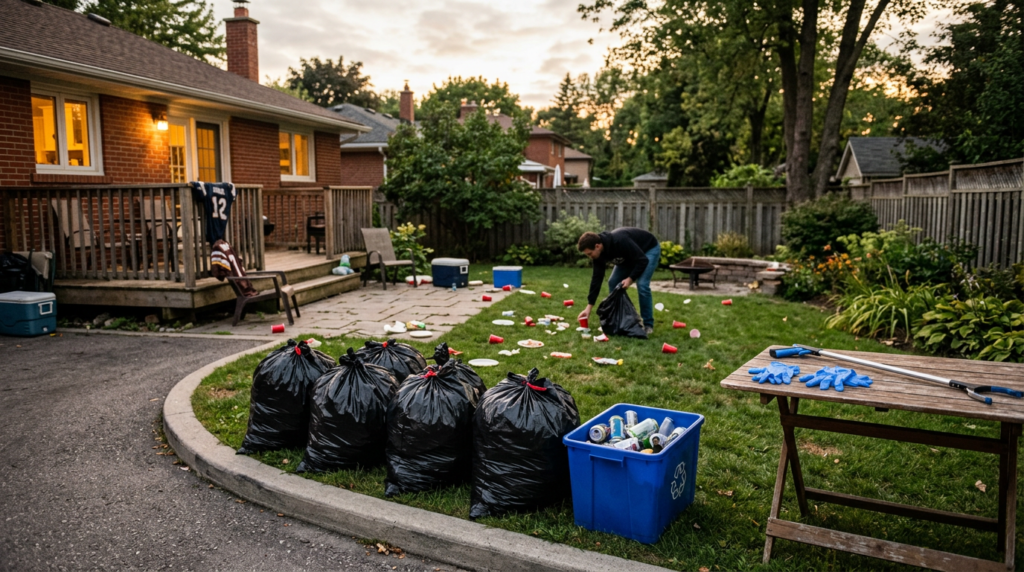
Post-game trash cleanup gets messy fast: cups under bleachers, greasy boxes on the tailgate, and “mystery bags” that nobody claims. If you host watch parties, tailgates, team dinners, or you’re the unofficial cleanup captain for your group, a simple plan keeps the job from turning into an all-night scavenger hunt. This checklist helps you sort waste responsibly, prevent odors and pests, and avoid the classic next-day regret of finding sticky spills where feet (and pets) will definitely step. In the fall season, cooler evenings can make it tempting to “deal with it tomorrow,” but food scraps and liquids still create smells and leaks by morning. Use the steps below to clean up quickly, keep your space usable, and make the next gathering easier to manage.
For a quick refresher on what typically belongs in carts, what needs bagging, and how pickup routines usually work, review Understanding Curbside Garbage Pickup: Processes and Benefits before you set out your waste.
If you want help planning reliable post-game trash cleanup in Athens, GA, start by matching your cleanup setup (bags, bins, and staging area) to the amount and type of waste your group generates.
Key Points to Know First
- ✓ Prioritize safety and speed: clear spills, broken glass, and sharp items first.
- ✓ Separate “wet” food waste from dry trash to reduce leaks and odors.
- ✓ Keep recycling clean and empty; contamination can cause a whole load to be rejected depending on local rules.
- ✓ Stage bags in one spot so you only carry waste once (not five separate trips).
- ✓ If you’re unsure about local recycling rules, confirm with your local provider or municipality—guidelines vary by area.
How Post-Event Waste Cleanup Works
The smoothest cleanups follow a simple flow: clear hazards → sort by type → contain liquids/food → stage for pickup. Most of the “gross factor” comes from mixing wet food, ice, and drinks with paper products and packaging. Once that happens, bags leak, bins get sticky, and the smell sticks around longer than your team’s post-game recap.
A practical setup is two main streams—trash and recycling—plus one small “special items” spot for sharps (like broken glass), greasy materials, and anything you’re not sure about. The goal is not perfection; it’s clean containment so waste can be handled safely and your space is usable again.
Why Timing and Sorting Affect Smell, Pests, and Extra Mess
Waiting to clean up can turn a quick reset into a bigger chore. Food residue attracts insects and animals, liquids soak into cardboard, and lightweight packaging blows into shrubs and storm drains. If bags rip or leak, you may spend more time scrubbing the bin than you did enjoying the game.
Sorting also affects what can be recycled locally. Many programs require items to be empty and reasonably clean. If recycling is mixed with food and liquids, it may be treated as trash depending on local processing rules.
Quick Local Do/Don’ts
Recycling rules can change by provider and by address (city vs. county). For Athens-Clarke County guidance, start with the official resources below and follow the instructions for your cart/collection type:
- Athens-Clarke County Solid Waste Department: https://www.accgov.com/solidwaste
- Athens-Clarke County Recycling information: https://www.accgov.com/recycling
- DO keep recyclables empty and reasonably clean. Food/liquid residue is a common reason items get treated as trash, and requirements can vary by program. (Source: https://www.accgov.com/recycling)
- DON’T “wishcycle.” If you’re unsure an item is accepted, set it aside and check the county guidance rather than tossing it in recycling and risking contamination. (Source: https://www.accgov.com/recycling)
- DO flatten clean cardboard. Breaking down boxes saves space and helps prevent overflow; keep food-soiled cardboard out of recycling unless your local guidance explicitly allows it. (Source: https://www.accgov.com/recycling)
- DON’T put broken glass loose in a bag. Treat it as a safety hazard: sweep it up and contain it in a rigid container or carefully double-bag and label it. Whether glass is accepted in curbside recycling depends on the local program. (Source: https://www.accgov.com/recycling)
- DO keep plastic bags/film out of curbside recycling unless your program specifically accepts them. Many programs require drop-off alternatives for film plastics; check the county’s accepted-material list for your area. (Source: https://www.accgov.com/recycling)
Mistakes That Make Cleanup Take Twice as Long
- ✓ Skipping a “liquids first” sweep: Dump melted ice and half-full cups before bagging. Liquids are a common cause of leaks and sticky bins.
- ✓ Stuffing sharp or rigid items into thin bags: Broken glass, skewers, and sharp plastic edges can puncture bags. Use a rigid container or double-bag and label it.
- ✓ Tossing greasy cardboard with recycling: Grease can contaminate paper fibers. If it’s oily or food-soaked, it usually belongs in trash (confirm local rules).
- ✓ Mixing food scraps into the main bag: Keep “wet waste” in a smaller, well-tied bag to reduce odor and mess.
- ✓ Leaving bags on the ground overnight: Animals can tear them open. Stage in a secure container if you can.
- ✓ Forgetting the last 10%: Check under chairs, around the grill, and near parking spots—trash hides where people stand and snack.
Your High-Priority Cleanup Game Plan
- ✓ [HIGH] Put on gloves and do a hazard sweep: Pick up broken glass, bottle caps, and skewers first. Use a dustpan for shards—don’t “feel around” in grass.
- ✓ [HIGH] Set up a 3-zone station: One bin/bag for trash, one for recycling, and one small container for “not sure / sharp.” This prevents re-sorting later.
- ✓ [HIGH] Empty liquids before bagging: Pour drinks into a sink or appropriate drain area. Keep liquids out of bags to help prevent rips and odors.
- ✓ [HIGH] Contain food waste separately: Tie a smaller bag for plates with leftovers, wings, dips, and anything wet. Double-knot it.
- ✓ [MED] Break down boxes and stack them: Flatten clean cardboard to save space. If it’s greasy, keep it with trash unless local rules say otherwise.
- ✓ [MED] Quick rinse only when it helps: If your local recycling guidance requires clean containers, a fast rinse can reduce odors. If water use is a concern, scrape and empty thoroughly.
- ✓ [MED] Stage everything in one carry-out spot: Pick a single “exit point” (garage corner, curb staging area, or near the gate) so you’re not making repeated trips.
- ✓ [LOW] Wipe high-touch mess zones: Hit the tailgate surface, grill side shelf, and drink table with a basic cleaner to prevent sticky residue.
- ✓ [LOW] Do a final perimeter lap: Walk the edges—fence line, driveway, street edge, and shrubs—where wind-blown items collect.
The Small Setup Change That Helps Most
A common setup that speeds cleanup is placing a clearly visible trash-and-recycling station where people naturally gather (near the food and drinks), then adding a smaller “wet waste” bag for leftovers. This approach can help reduce roaming trash piles and may lower the chance of leaking bags later—results depend on your crowd size, the food served, and local disposal rules.
When DIY Cleanup Needs Outside Support
- ✓ You have more bagged waste than your containers can safely hold without overflow.
- ✓ Bags are repeatedly tearing or leaking (a sign the waste stream needs different containment).
- ✓ Your cleanup area includes lots of public foot traffic where loose debris is a safety concern.
- ✓ You’re managing cleanup for a business or multi-tenant property and need consistent handling.
- ✓ You’re unsure how to handle certain items—confirm disposal guidance locally rather than guessing.
Common Questions Answered
How do I keep bags from leaking after a watch party?
Empty liquids first, keep food waste in a smaller tied bag, and avoid overfilling. If the load is heavy or has sharp edges, double-bagging can help prevent punctures.
Can greasy pizza boxes go in recycling?
Rules vary by local program. Many require cardboard to be clean and dry; greasy or food-soiled boxes are often treated as trash. Check your local guidance to be sure.
What’s the simplest way to separate recycling during a busy event?
Use one clearly marked container for empty cans and bottles and place it next to the main trash bin. Keeping recycling “clean and empty” reduces contamination.
What should I do with broken glass from a bottle?
Sweep it up with a broom and dustpan and place it in a rigid container or carefully double-bag it. Keep it separate from loose bags to reduce injury risk. Whether glass is accepted in recycling depends on local program rules.
Taking Action After the Final Whistle
A solid cleanup plan is mostly about containment: separate wet waste, keep recycling clean, and stage bags in one spot. If you handle hazards first and keep liquids out of bags, you’ll avoid a lot of the mess that makes cleanup drag on. Use the checklist above for a faster reset and a cleaner space for the next get-together.
If you need extra pickup or recycling support after an event in Athens, reach out to discuss service options and scheduling.