Recycling contamination can turn a good-intentioned bin into a messy, rejected load—sometimes without you realizing it. If you’re a homeowner, property manager, or business setting out mixed recyclables, the warning signs usually show up first in the small stuff: odors, residue, “wish-cycling,” and bags where they don’t belong. Catching these red flags early helps protect collection equipment, reduces pests and cleanup headaches, and keeps your recycling routine simple for everyone using the bin. During the summer months, heat can amplify smells and sticky residue, making contamination problems easier to spot—and harder to ignore.
If you want a clear baseline for what belongs in the cart and how the process typically works, start with Understanding Curbside Garbage Pickup: Processes and Benefits. It’s a helpful way to align what you toss with how it’s handled after pickup.
For local service options, see recycling contamination help in Athens, GA.
Key Takeaways: Spot Contamination Before It Spreads
- Bad smells, sticky bins, or visible food residue usually mean your recyclables aren’t “empty and dry” enough for typical collection standards.
- Plastic bags in the recycling cart are a frequent contamination trigger in many programs and can tangle sorting equipment.
- Liquids left in bottles and cans can soak paper products and ruin otherwise recyclable material.
- “Wish-cycling” (tossing questionable items in and hoping) often creates more sorting problems than it solves.
- A simple reset—empty, rinse if needed, dry, and keep items loose—prevents most repeat issues.
How Recycling Contamination Starts (and Snowballs)
Contamination happens when non-recyclable items—or recyclables that are too dirty or wet—mix into the recycling stream. The tricky part is that one problem item can affect a lot of good material. For example, a half-full soda bottle can leak and soak paper and cardboard. A greasy pizza box can smear oils onto other paper products. Plastic bags and “bagged recyclables” are also a common problem in many communities because they can wrap around moving parts at sorting facilities, slowing processing and increasing handling time.
Rules vary by community and by facility, so the safest approach is to follow your hauler’s accepted-items guidance and keep recyclables clean, empty, and loose whenever possible.
The Real-World Consequences of Letting It Slide
Contamination isn’t just a technicality. It can create practical problems that show up fast at home or at a business:
- More pests and odors: Food residue and liquids attract insects and animals and can make bins smell “off” even after pickup.
- Messy cleanup: Sticky bins and leaked liquids mean more time rinsing carts, wiping down enclosures, and dealing with stained surfaces.
- Operational headaches: Overfilled carts, bagged recyclables, and prohibited items can slow collection and complicate handling.
- Higher disposal risk: If a load is heavily contaminated, it may not be processed the way you intended (standards vary by facility).
Contamination Traps: A Checklist of Common Mistakes
- Bagging recyclables: Plastic bags can be a major issue at sorting facilities. If your program doesn’t specifically allow bagged recycling, keep items loose.
- Leaving “a little” food or liquid behind: Residue builds up fast. Empty containers fully; rinse only when necessary and practical; let them dry.
- Putting paper with food stains in the cart: Grease and heavy staining can make paper products unacceptable in many programs.
- Mixing broken glass or sharp items loosely: This can be a safety issue for workers and may be prohibited depending on local guidelines.
- Assuming all plastics are recyclable: Not all shapes and resins are accepted everywhere. If you’re unsure, check local guidance instead of guessing.
- Overstuffing the cart: Lids that won’t close and jammed material can lead to spillage and missed items.
A Simple Action Plan to Keep Your Bin Clean
- Do a 10-second “sniff and look” check: Odor, pooled liquid, or visible grime usually means something needs to be removed or cleaned.
- Keep it empty, clean, and dry: Fully empty containers; quick rinse only when needed; let items dry before placing them in the cart.
- Keep recyclables loose: Skip plastic bags unless your local program explicitly instructs otherwise.
- Create a “not sure” box: Hold questionable items until you can confirm acceptance. This prevents repeat contamination.
- Flatten cardboard and keep paper clean: Dry, flattened cardboard saves space and reduces overflow that can cause messy set-outs.
- Post a mini list where people toss items: A short “YES/NO” reminder near the bin reduces accidental mistakes in shared spaces.
Professional Insight: The One Item That Causes the Most Confusion
Industry pattern (not a site-specific claim): Across many recycling programs, plastic bags—and recyclables placed inside plastic bags—create some of the most common “I didn’t know” mix-ups. People use bags to keep things tidy, but many sorting systems need items loose so they can be separated correctly and so equipment doesn’t get tangled. If you fix only one habit, start there.
When DIY Fixes Aren’t Enough
Basic cleanup and better sorting solve most problems, but it’s smart to get help when:
- Contamination keeps repeating in a shared building: Multi-tenant setups often need clearer signage, better bin placement, or a reset plan.
- You’re seeing frequent overflow: Chronic overfilling can cause spillover and mixing that’s hard to control.
- There’s a persistent odor or residue problem: That can signal ongoing food/liquid issues that require a more structured approach.
- Your team isn’t sure what’s accepted: If staff are guessing, contamination tends to climb quickly.
Your Questions, Answered
Do I need to rinse every container before putting it in the bin?
Many programs prefer containers to be empty and reasonably clean. A quick rinse can help when residue is heavy, but the goal is to avoid food and liquid left behind. Let items dry if possible so paper products don’t get soaked.
Are plastic bags okay if I tie them and keep everything together?
Often, no. Bagged items may not be sorted the same way as loose items, and bags can cause equipment issues. If your local program explicitly allows a specific method, follow that guidance; otherwise, keep items loose.
What should I do with greasy pizza boxes?
Many recycling programs don’t accept heavily greasy paperboard. If the top is clean, some people separate the clean portion and discard the greasy part, but acceptance rules vary—confirm locally to be safe.
Why does my recycling cart smell even after pickup?
Smells usually come from leftover food, sugary liquids, or damp paper stuck to the cart. Remove residue sources, rinse the cart if needed, and focus on emptying containers fully before they go in.
How can I reduce mix-ups in a workplace or apartment setting?
Use simple signage, keep trash and recycling bins paired together, and remove “maybe” items from the recycling area. A short, consistent yes/no list where people toss items typically reduces errors.
Taking Action Without Overcomplicating It
Most contamination problems come from a few repeat offenders: bags, liquids, and food residue. Use this quick diagnostic flow to find the cause fast:
- If you notice odor first: Look for food scraps, sticky containers, and liquids. Do today: remove food/soiled items, wipe pooled liquid, and keep paper/cardboard out until the bin is dry. Do this week: add a “rinse & dry” reminder where items are generated (kitchen/breakroom) and pair trash + recycling bins.
- If you see wet paper/cardboard: The usual culprit is liquid left in bottles/cans or rain getting into an open cart. Do today: pull out soaked paper, empty containers fully, and close the lid. Do this week: move the cart to a covered spot (if possible) and post a “empty & dry” note.
- If overflow happens often: Capacity and placement are the problem more than sorting. Do today: flatten boxes, break down bulky packaging, and keep the lid closed. Do this week: adjust set-out frequency, add capacity, or relocate bins so people don’t “top off” the recycling with trash.
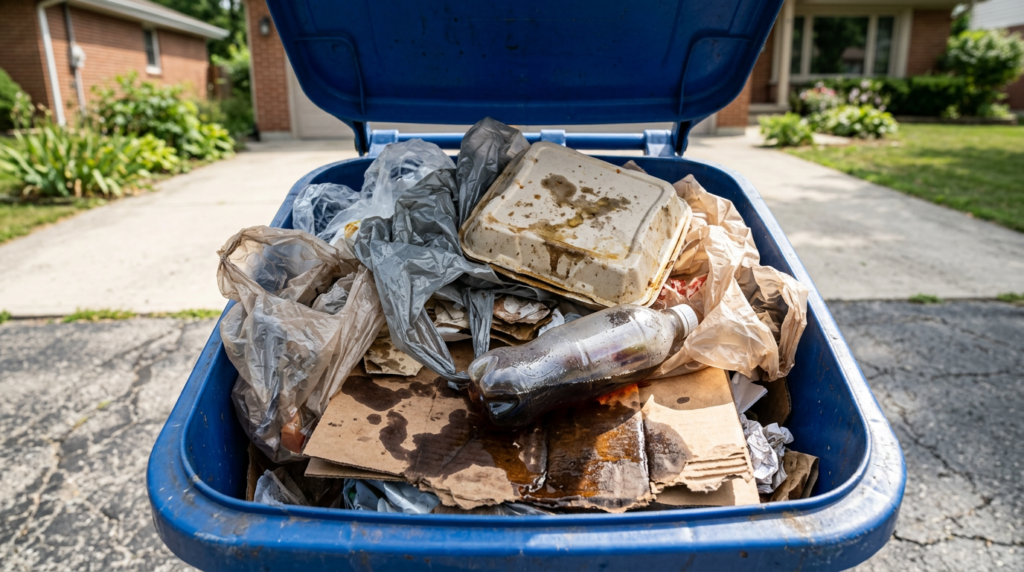
The photo above shows a few easy-to-miss warning signs you can correct right away:
- Bagged items inside the cart: Remove the plastic bag and place accepted recyclables loose (or use a designated bag drop-off if your area offers it).
- Mixed loose material piled high: If the lid can’t close, pull out overflow and set it aside for the next pickup (or dispose of it properly) to reduce windblown litter and cross-contamination.
- Visible “small stuff” mixed in: If you see questionable items (film, foam, food-stained paper), move them to trash or a “not sure” box until you confirm local acceptance.
Ready to Get Started?
Our team is here to help. Give us a call to discuss your needs.