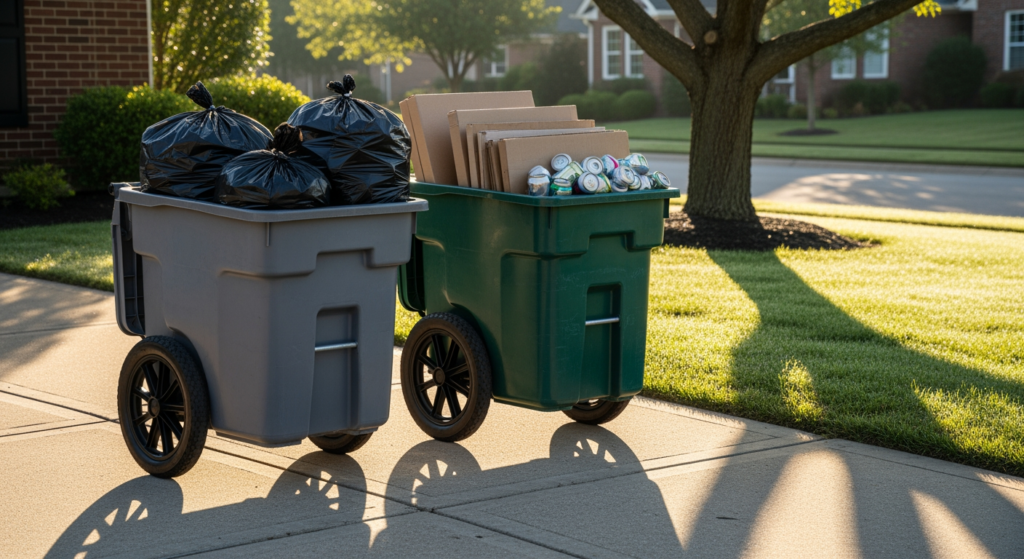
Knowing what belongs in trash pickup versus recycling pickup sounds simple—until you’re staring at a full bin and wondering what will actually be collected, what could be rejected, and what might create a mess for your household or business. This comparison is for homeowners, property managers, and small-business operators who want fewer missed pickups, cleaner carts, and a smoother weekly routine. In spring, when cleanouts and yard refresh projects ramp up, the difference between “trash” and “recyclables” matters even more. Getting it right can reduce odors, prevent overflow, and help you plan how many containers you need—without relying on guesswork.
If you want a deeper overview of how curbside collection is typically structured, start with Understanding Curbside Garbage Pickup: Processes and Benefits and then use the side-by-side guidance below to separate trash and recyclables more confidently.
Bottom Line Upfront: Trash vs Recycling
- Trash pickup is for everyday waste that is not accepted in standard recycling streams.
- Recycling pickup is for specific materials that programs commonly accept (often paper, cardboard, metal cans, and certain plastics), prepared according to local rules.
- Mixing non-accepted items into recycling can lead to rejection or extra handling, depending on the program and hauler procedures.
- Trash is usually bagged; recycling is often loose in a cart or placed in designated containers—rules vary by provider.
- The best choice depends on material type, contamination risk, and how your service is set up (cart size, schedule, and guidelines).
How Trash Pickup and Recycling Pickup Actually Differ
Trash pickup and recycling service are designed for different waste streams. Trash collection is intended for non-recyclable household or business waste—think food-soiled items, mixed materials that aren’t accepted, and other everyday garbage. Recycling collection is intended for a narrower list of materials that can be processed through a recycling program when they’re prepared correctly (for example, empty, reasonably clean, and sorted as required).
Where people get tripped up is that “recyclable in theory” isn’t always “accepted in your program.” Many services publish lists of accepted materials and preparation rules (like flattening cardboard, keeping plastic bags out, or not including food residue). Following those guidelines helps reduce contamination and keeps collection consistent.
Side-by-Side Comparison: What to Put Where
| Criteria | Trash Pickup | Recycling Pickup |
|---|---|---|
| Primary purpose | Remove non-accepted and mixed waste | Collect accepted materials for recycling programs |
| Typical materials | Food waste, diapers, broken items, heavily soiled paper products | Often paper/cardboard, metal cans, certain plastic containers (program-specific) |
| Preparation | Usually bagged and tied; keep lids closed | Often empty and reasonably clean; may need flattening/sorting per guidelines |
| Contamination sensitivity | Lower (trash is expected to be mixed) | Higher (non-accepted items can cause problems for processing) |
| Odor/pest risk | Higher if food waste is loose or carts aren’t maintained | Lower when containers are rinsed and dry; can rise with residue |
| Best for | Daily waste, messy materials, “not sure” items | Households/businesses that can follow accepted-material rules consistently |
The Real-World Impact on Your Time, Budget, and Cleanliness
Choosing the right stream isn’t just about “doing the right thing”—it affects the day-to-day experience of your service. When recycling is contaminated (for example, with food residue or non-accepted materials), you may spend extra time re-sorting, dealing with overflow, or cleaning up loose debris. On the trash side, overfilling carts or placing loose waste without bags can increase odors and make cleanup harder.
From a cost/value perspective, the “best” setup is usually the one that matches your waste volume and habits. If your household produces lots of packaging and paper, a larger recycling capacity can reduce how quickly trash fills up. If your waste is mostly food-related or mixed materials, prioritizing adequate trash capacity and good bagging practices can keep things cleaner and more predictable.
Common Sorting Mistakes That Cause Missed or Messy Pickups
- “Wish-cycling” questionable items — If you’re unsure an item is accepted, it often belongs in trash unless your provider says otherwise.
- Placing food-soiled paper in recycling — Greasy or wet paper products are commonly not accepted.
- Using plastic bags in recycling carts — Many programs don’t accept bagged recyclables; check your provider’s rules.
- Leaving liquid in containers — Residue and liquid can contaminate other materials and create odors.
- Overfilling or “mounding” carts — Lids that won’t close can lead to litter, pests, and collection issues.
- Assuming all plastics are treated the same — Acceptance can depend on resin type and local processing capability.
A Practical Setup That Makes Weekly Collection Easier
- Create a two-bin system indoors — One for trash, one for recyclables, so sorting happens once.
- Post your accepted-material list near the bins — Keep it simple and visible for everyone using the space.
- Empty and lightly rinse containers — Let them drain/dry to reduce odors and residue transfer.
- Flatten cardboard early — Saves cart space and reduces overflow on busy weeks.
- Bag trash and tie it off — Helps control odor, pests, and loose debris.
- Do a quick “top check” before rollout — Remove obvious non-accepted items from recycling to avoid problems.
Professional Insight: What Most People Miss
In practice, we often see that the biggest improvement comes from simplifying decisions: households and businesses do better when they follow a short, consistent “always recycle” list (like clean cardboard and paper) and treat everything else as trash unless they’ve confirmed it’s accepted. That approach reduces contamination and makes weekly set-out faster.
When It’s Time to Ask for Service Guidance
Consider getting help or clarification if any of these apply:
- Your recycling is frequently overflowing and you’re unsure whether to add capacity or change what you’re putting in.
- Pickups are inconsistent because materials are being set out incorrectly or carts are overfilled.
- You manage a business or multi-tenant property where multiple people need simple, enforceable rules.
- You’re doing a cleanout and expect unusually high volumes that won’t fit normal weekly service.
- You’re unsure about special items (for example, bulky materials) and need to confirm acceptable disposal options.
Common Questions Answered
Do I need to rinse containers before putting them in the recycling cart?
Many programs expect containers to be empty and reasonably clean. A quick rinse and drain can help reduce residue that may contaminate paper and cardboard. Always follow your provider’s specific preparation rules.
What should I do with pizza boxes and other greasy cardboard?
Greasy or food-soiled cardboard is commonly treated as trash because oil can interfere with processing. If a portion of the box is clean, some people separate the clean lid from the soiled bottom—only if their program allows it.
Are plastic bags okay if I tie them and place them in the recycling cart?
Many curbside programs do not accept recyclables placed in plastic bags. Bagged items can be hard to sort and may be treated as contamination. Use your designated container method and confirm local guidelines.
Can I put broken glass or ceramics into the recycling container?
Acceptance varies widely, and broken glass can create safety issues. Ceramics are typically not accepted in standard recycling streams. When in doubt, treat it as trash unless your service guidelines clearly allow it.
How can I reduce odor in my trash cart between pickups?
Bag food waste securely, keep the lid closed, and avoid placing loose liquids in the cart. If needed, rinse the cart periodically and let it dry fully before use.
Where to Go from Here
Trash pickup and recycling collection serve different goals, and the best results come from matching each item to the right stream and preparing it the way your service requires. Use the comparison table to decide quickly, then tighten up your routine with a simple indoor sorting setup and a quick pre-rollout check. If your volume, property type, or day-to-day operations make it hard to stay consistent, getting clear service guidance can save time and prevent recurring issues.
Get Your Free Quote from AAA Sanitation & Garbage Removal
Find out how AAA Sanitation & Garbage Removal can help with a quote.