
Starting a residential trash pickup service (or switching providers) can feel oddly complicated for something as simple as “take the trash away.” If you’re a homeowner, renter, landlord, or new-to-the-area resident in Athens, GA, the basics matter: what goes in the cart, how to set it out, what to do with bulky items, and how to avoid missed pickups or extra fees. In the summer months, extra household waste and yard cleanups can make those details even more important. The good news is that once you understand a few ground rules, most of the stress disappears—and your curb stays cleaner, too.
If you want a deeper overview of how curbside service is typically structured, our guide on Understanding Curbside Garbage Pickup: Processes and Benefits is a helpful next read.
The Essentials You Should Know Up Front
- Trash service is usually “set-out + collection.” You place bagged waste in your container and set it out correctly for pickup.
- Accepted items vary by provider and local rules. When in doubt, confirm what’s allowed so you don’t contaminate recycling or create a safety issue.
- Bagging and securing waste prevents messes. Tied bags and closed lids help reduce odors, litter, and animal problems.
- Bulky items often require special arrangements. Furniture, mattresses, and large debris may need a separate pickup process.
- Consistency beats guesswork. Using the same set-out routine each pickup day helps avoid missed collections.
How Residential Trash Pickup Typically Works at the Curb
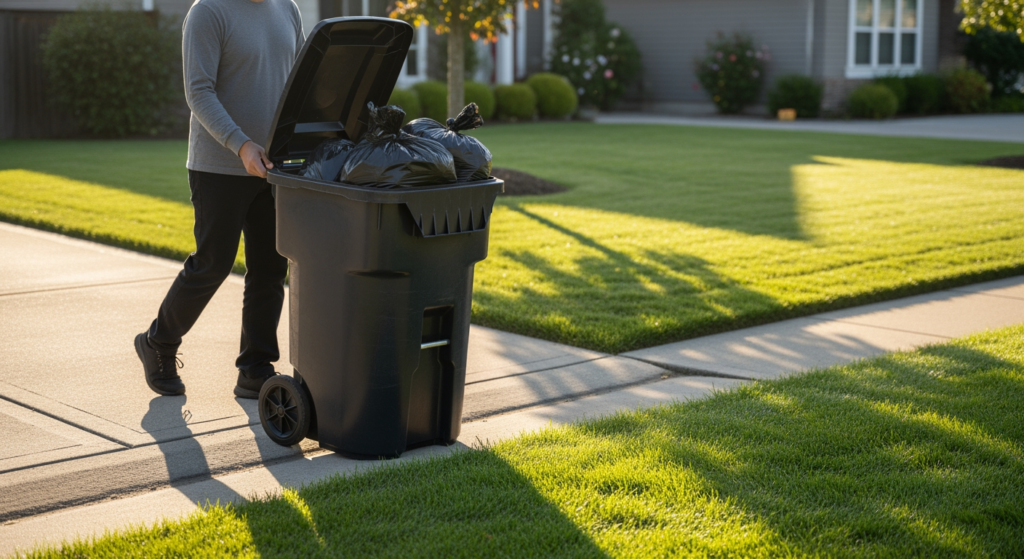
At its core, curbside trash service is a simple system: you collect household waste, place it in a designated container (often a cart with a lid), and set it out in the right spot so the truck can safely service it.
For beginners, here are the main moving parts:
- Your container: Many services use a lidded cart. The lid matters—open containers can invite rain, odors, and critters.
- Set-out location: The cart is typically placed at the curb or a designated pickup point. Keep it accessible and not blocked by cars, mailboxes, or low-hanging branches.
- What goes inside: “Household trash” usually means everyday non-recyclable waste from kitchens, bathrooms, and general home use. Items like chemicals, batteries, or unknown materials may require different handling—always confirm locally.
- Pickup frequency: Many homes have a regular weekly schedule, but service frequency and rules can vary by provider and municipality.
Why Getting the Basics Right Saves Time, Money, and Headaches
Small mistakes with household waste add up fast. A lid that won’t close, loose debris, or the wrong item in the wrong container can lead to extra cleanup, delays, or a cart that’s too heavy to handle safely.
Getting the fundamentals right helps you:
- Reduce missed pickups: Clear access and consistent placement make collection smoother.
- Avoid mess and pests: Bagged trash and closed lids help limit odors and scavenging animals.
- Protect your driveway and curb area: Preventing leaks and overflow keeps things cleaner and easier to manage.
- Keep recycling cleaner: When trash and recyclables are separated correctly, it’s easier to follow local recycling guidance (which can vary by area).
Common Missteps Beginners Make (Use This Checklist)
- Overfilling the cart: If the lid can’t close, waste may spill or get wet, and pickup may be more difficult.
- Skipping bags for “dry” trash: Loose waste can blow out, stick to the cart, or create odor issues faster than you’d expect.
- Placing carts too close to obstacles: Cars, fences, mailboxes, and low branches can block access for the truck.
- Mixing prohibited items into household trash: Some materials require special disposal. If you’re unsure, confirm before you set it out.
- Assuming bulky items are included: Large items often need scheduling or specific preparation steps.
- Waiting until the last minute to set out: A rushed set-out increases the chance of a blocked cart, an open lid, or forgotten items.
A Simple Set-Out Routine That Works for Most Homes
- Bag household waste and tie bags securely to reduce leaks and odors.
- Keep the lid fully closed so rainwater stays out and animals are less tempted.
- Place the cart in a clear, accessible spot with enough space around it for safe servicing.
- Keep heavy items manageable by distributing weight across multiple bags where appropriate.
- Separate recyclables as directed locally and keep food/liquid contamination out of recycling.
- Plan ahead for bulky items by asking about options and prep requirements before moving things to the curb.
Professional Insight: The One Detail Most People Miss
In practice, we often see “missed pickup” complaints that come down to simple access issues—carts tucked behind a parked car, set too close to a mailbox, or placed where the truck can’t safely reach them. A consistent, unobstructed set-out spot is one of the easiest ways to make service feel dependable and predictable.
When It’s Smart to Ask for Help
Consider reaching out to a trash service provider when:
- You have recurring overflow: If your cart is regularly overfilled, you may need a different service level or a better waste-reduction plan.
- You’re dealing with bulky cleanup: Moving, remodeling, or clearing out a home often creates items that don’t fit standard curbside collection.
- You’re unsure about a specific material: If you can’t confirm whether something is accepted, it’s safer to ask than to guess.
- You manage a rental property: Clear guidelines for tenants can reduce contamination, mess, and set-out problems.
- You need clearer communication: If billing questions or schedule changes are confusing, a quick call can prevent ongoing frustration.
Common Questions Beginners Ask
What counts as regular household trash?
Typically, it’s everyday non-recyclable waste from normal home use (kitchen and bathroom waste, packaging that isn’t recyclable locally, and similar items). Exact accepted materials can vary, so check your provider’s guidelines.
Do I need to bag everything, or can it go loose in the cart?
Bagging is usually the cleaner, easier option. Tied bags help prevent spills, reduce odors, and make it simpler to keep the cart sanitary.
How do I handle a mattress, sofa, or other bulky item?
Bulky items often require special arrangements or specific prep steps. Contact your provider to confirm what’s allowed and how to schedule or set it out properly.
Can I put recycling in the trash if I’m not sure?
If you’re unsure about an item, it’s better to confirm local recycling guidance than to guess. Rules and accepted materials vary by program, and mixing items incorrectly can create sorting problems.
What should I do if my pickup is missed?
First, confirm your cart was placed correctly and not blocked. Then contact your provider with your address and a brief description of the issue so they can advise on next steps.
Taking the Next Step with Confidence
Once you understand the basics—bagging waste, keeping lids closed, placing carts accessibly, and planning for bulky items—curbside service becomes straightforward. A simple routine also helps keep your curb cleaner and reduces the chances of preventable issues. If you’re setting up service for the first time or trying to make your current setup smoother, a quick conversation can clear up the details that vary by area or provider.
Learn More About Our Services
Discover how we can help you achieve your goals.