
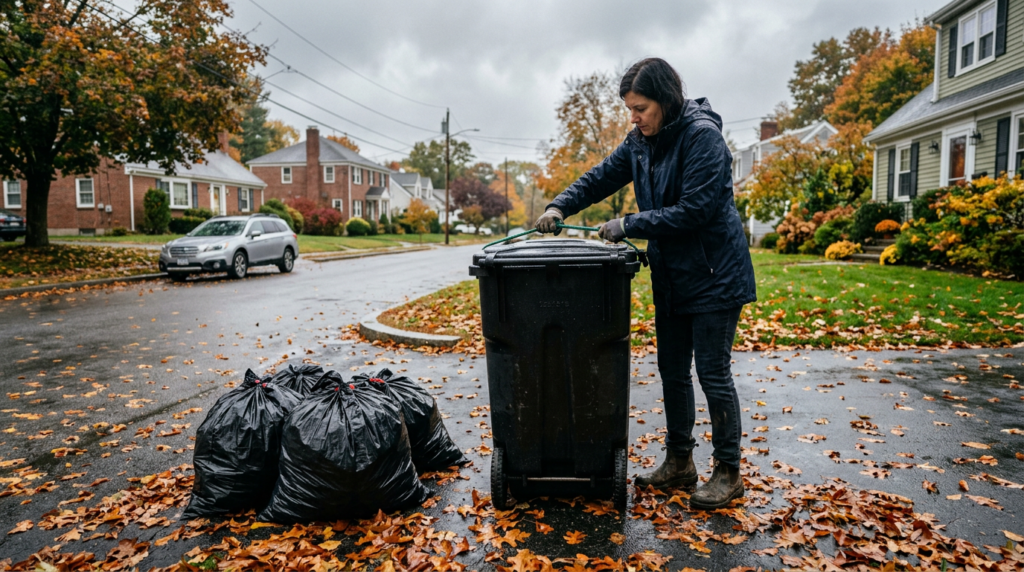
Storm prep can turn normal trash day into a mess fast: soggy cardboard, tipped carts, scattered litter, and bins that “go for a walk” down the street. This checklist is for homeowners, renters, property managers, and small businesses in Athens, GA who want a simple, customer-support-style plan for keeping pickup smooth and keeping your curb (and neighbors) happier. Fall is also when yards shed leaves and schedules get busier, so having a repeatable routine helps you stay ahead without overthinking it. Use the steps below to reduce spill risks, prevent contamination, and make it easier for your hauler to service your address safely.
For a quick refresher on what happens from curb to truck (and why placement matters), see Understanding Curbside Garbage Pickup: Processes and Benefits.
Bottom Line Upfront: storm prep trash pickup essentials
- Secure containers first. A closed lid and stable placement prevent windblown trash and waterlogged bags.
- Bag and tie lightweight waste. Loose items (paper, foam, small packaging) are the first to scatter.
- Keep storm debris separate. Yard waste, branches, and bulky items often have different handling rules than household trash.
- Protect recyclables from contamination. Wet/dirty recycling can become non-recyclable depending on local processing rules.
- Plan for access. Clear space around the container so pickup can happen efficiently and safely.
How storm-ready trash pickup works
Most pickup issues during storms come down to three things: wind (blowing lids open and scattering loose items), water (soaking paper products and weakening bags), and blocked access (downed limbs, parked cars, or containers placed where crews can’t safely approach). Storm prep is less about doing anything fancy and more about controlling those variables.
In practical terms, you’re aiming for: (1) contained waste (bagged, tied, lids closed), (2) clean sorting (trash vs. recycling vs. yard debris), and (3) predictable placement (easy to spot, easy to service, not obstructed). Local rules can vary by provider and municipality, so confirm any special set-out requirements with your service provider if you’re unsure.
The real cost of skipping storm prep
- More cleanup time. One torn bag can turn into 20 minutes of chasing wrappers and soggy paper.
- Higher contamination risk. Rain-soaked cardboard and food-smeared containers can compromise recycling loads depending on local processing.
- Missed or delayed service. If access is blocked or containers are unsafe to service, pickup may be harder to complete.
- Pest and odor problems. Wet waste and open lids can attract animals and create lingering smells.
- Neighbor friction. Windblown litter doesn’t respect property lines.
High-priority mistakes that cause missed pickup
- ✓ Setting out loose items “just this once.” If it can blow away, it will. Bag it and tie it.
- ✓ Overstuffing bags until they split. Heavy, wet trash stresses seams—use an extra bag instead of one bursting bag.
- ✓ Leaving lids ajar. Even a small gap invites rain and gives wind a handle to pry the lid open.
- ✓ Mixing storm debris with household waste. Branches, leaves, and bulky cleanup items may require separate handling; confirm locally.
- ✓ Placing containers where water pools. Standing water can soak bags and make containers harder to move.
- ✓ Blocking access with cars or piled debris. Leave enough clearance for safe service and visibility.
- ✓ Putting questionable items in the bin. Paint, chemicals, and similar materials may have special disposal rules; follow local guidance.
Your storm-prep action plan for trash day
- ✓ Do a “lightweight sweep” before set-out. Collect loose paper, plastic film, and foam; bag and tie securely.
- ✓ Double-bag wet or messy waste. Use a second bag for items likely to leak or tear (food waste, saturated materials).
- ✓ Keep recyclables clean, empty, and dry when possible. If materials are soaked or food-contaminated, check local guidance—some items may belong in trash.
- ✓ Close lids completely and prevent tipping. Place carts on flat ground; avoid slopes, curb edges, and areas with strong wind exposure.
- ✓ Create a clear service zone. Leave space around the container so it can be accessed without moving obstacles.
- ✓ Separate yard debris and bulky cleanup items. Bundle or stage them according to your provider’s instructions and local rules.
- ✓ Label your container discreetly (if allowed). A simple address marker can help reduce mix-ups; follow any provider guidance on markings.
- ✓ Do a quick post-pickup check. If anything spilled, pick it up promptly to prevent drain clogs and neighborhood litter.
Professional Insight: the small step that prevents big messes
A common failure pattern is one loose bag or a lid that didn’t latch—then wind and rain do the rest. A 30-second “lid-and-tie” check right before you roll the container out prevents most curbside chaos.
Athens, GA storm debris & recycling: local rules to confirm
Sourced guidance: Athens-Clarke County (ACC) and/or your specific hauler may have set-out rules for yard waste, storm debris, and recycling contamination (what belongs in the cart, how items must be bundled, and what gets rejected). Before you set out storm cleanup materials, verify the current instructions directly with ACC or your provider so you don’t accidentally mix debris types or contaminate recycling.
- Yard waste vs. storm debris: Many communities treat limbs/brush differently than bagged household trash. Check ACC’s published guidance for how to prepare branches (length/diameter limits, bundling, or special collection instructions).
- Recycling contamination: Wet/food-soiled paper and cardboard are commonly restricted because they can’t be processed effectively. Confirm ACC’s recycling rules for what to do with soaked cardboard after a storm.
- Set-out timing and placement: Local guidance may specify where carts must be placed (curb vs. roadside), what clearance is required, and when materials can be set out.
Note: Rules change, and some addresses in the Athens area may be served by different providers. Use ACC’s official pages and/or your hauler’s customer instructions as the final word for your route.
When you should ask for support instead of guessing
- You have more debris than fits safely. If lids won’t close or bags are splitting, pause and ask about options.
- You’re unsure what counts as acceptable storm debris. Rules vary; confirm how to handle branches, leaves, and bulky items.
- Your access is blocked. If the container can’t be placed safely or reached, contact your provider for guidance.
- You suspect prohibited materials are involved. If cleanup includes chemicals, fuels, or unknown substances, follow local disposal instructions and don’t place them curbside unless explicitly allowed.
Common Questions Answered
Should I put my cart out if heavy rain is expected?
If you do set out, focus on preventing water intrusion and spills: tie bags, close the lid fully, and place the cart on stable ground. If you’re uncertain about timing or set-out rules, confirm with your service provider.
What’s the best way to keep trash bags from ripping in wet weather?
Avoid overfilling, use sturdier bags for heavy waste, and double-bag items that are likely to leak. Wet paper and food waste can add weight quickly, so distribute loads across multiple bags.
Can I put branches and yard debris in my regular container after a storm?
Maybe. Yard debris handling varies by local rules and by provider. Keep branches and leaves separate until you confirm the accepted method (bundling, special pickup, or designated yard waste service).
What should I do if my recycling gets soaked?
Wet materials can be harder to process, especially if paper products are saturated or contaminated. Follow local guidance for your area and provider; when in doubt, prioritize keeping recycling clean and free of food residue.
How can I reduce litter if my neighborhood is windy?
Bag and tie lightweight items, keep lids closed, and avoid placing containers where gusts hit directly (like the top of a steep driveway). A quick check for loose debris before and after pickup also helps.
Taking Action
Storm prep is mostly about containment, separation, and access. If you keep lids closed, bag lightweight items, and stage debris the right way, you reduce cleanup time and lower the odds of a missed or messy pickup. Use the checklists above as a repeatable routine any time weather turns unpredictable. If you need clarification on how to set out materials or handle extra debris, getting guidance early can save you a curbside headache later.
If you want help choosing the right set-out approach for trash vs. recycling (and how to handle extra storm debris), reach out for guidance.