
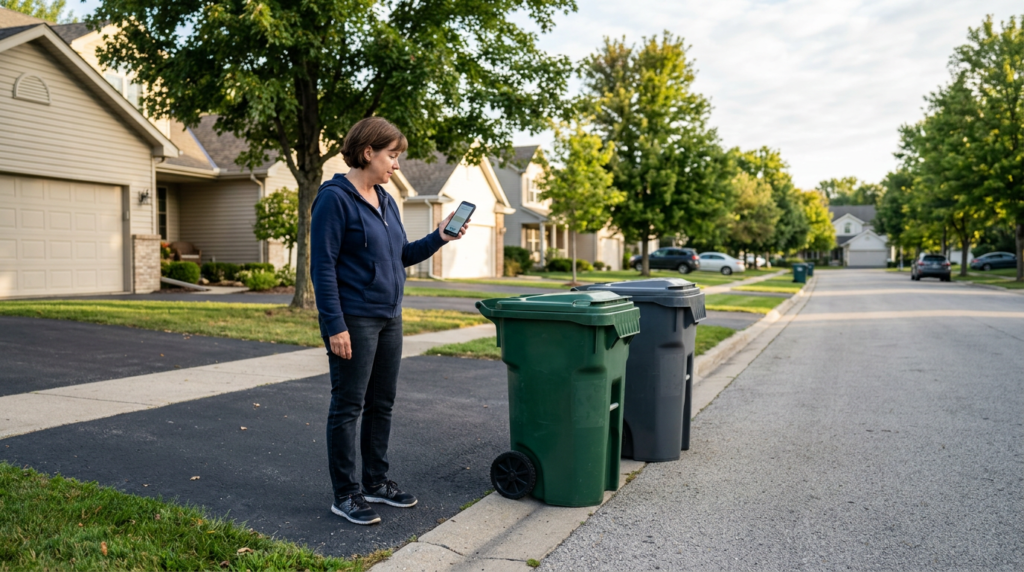
Clear trash pickup communication solves more problems than extra phone calls ever will. If you manage a household, an HOA, a rental property, or a small business, missed pickups and overflowing carts can turn into a fast-moving mess—especially when routines shift in the fall and everyone’s schedule gets tighter. The good news is that most service issues are preventable with a simple, repeatable communication system that sets expectations, captures the right details, and closes the loop. This case-study style example breaks down a realistic scenario, the approach used to reduce confusion, and the specific habits you can copy for your own curbside routine in Athens, GA. For a deeper primer on how the service typically runs end-to-end, see this guide to curbside garbage pickup processes and benefits.
Communication That Prevents Missed Pickups
- Use one “source of truth” (a shared note or property log) for pickup day, set-out time, and container rules.
- Report issues with specifics: address, container type, where it was placed, and what time it was set out.
- Separate urgent service problems from general questions so the right request gets handled first.
- Close the loop with a confirmation step so residents/tenants know what changed and what to do next.
- Track repeat issues by category (access blocked, contamination, late set-out, overflow) to fix root causes.
A Simple System for Fewer Service Headaches
Background/context: A small property manager oversees a mixed group of residents—some long-term, some new. Communication is happening everywhere: texts, sticky notes, hallway chats, and the occasional “Hey, did you see the truck?” message. The result is predictable: inconsistent set-outs, unclear responsibility, and frustration when something goes wrong.
The challenge: The manager needs a support-friendly process that (1) reduces “he said/she said” timelines, (2) makes it easy for residents to do the right thing, and (3) provides a clean, complete report if a pickup issue needs to be escalated.
Constraints: No fancy software. No assumptions about local rules. The system must work even if a resident never checks email.
What to do with the photo step: Stand where a driver would approach, capture the cart’s position relative to the curb/driveway edge, and make sure the image shows any potential blockers (parked cars, low branches, construction materials). Don’t include faces, license plates, or anything you wouldn’t want shared in a group chat.
Build a “Three-Message” Support Loop
This example uses a lightweight communication loop that fits most homes and properties. It’s built around three messages: one before pickup, one for reporting a problem, and one to confirm resolution.
1) The Pre-Pickup Message
- What it includes: pickup day, set-out window, where containers should go, and a reminder to keep access clear.
- Why it works: it reduces last-minute guesswork and prevents “I thought someone else moved it” confusion.
2) The Issue Report Message
- What it includes: address/unit, container type (trash vs. recycling), placement (curb/driveway edge/alley), set-out time, and what was observed (not collected, partially collected, spilled, lid left open, etc.).
- Why it works: support teams can act faster when the report is complete and time-stamped.
3) The Close-the-Loop Message
- What it includes: what was done (or what is scheduled), what residents should do differently next time, and one point of contact for follow-up.
- Why it works: it prevents repeat tickets caused by uncertainty and rumor.
What Poor Communication Costs You
- Time: Multiple back-and-forth messages often take longer than one complete report with the right details.
- Cleanliness: Overflow attracts pests and creates litter risk, especially if bags are left outside containers.
- Neighbor relations: One missed set-out can become a shared eyesore in multi-unit areas.
- Property operations: Maintenance teams get pulled into preventable tasks (moving carts, cleaning spills, responding to complaints).
- Decision quality: Without a log, you can’t tell if the root cause is access, timing, overfill, or sorting mistakes.
Where to Confirm Local Pickup & Recycling Rules
Don’t copy rules from another neighborhood or a friend in a different part of town. In Athens-Clarke County, details can vary by program type and location. Confirm your current requirements on official local government pages:
- Athens-Clarke County (ACC) Solid Waste: Look for collection schedules, set-out guidance, and cart placement rules.
- ACC Recycling program pages: Check accepted materials, preparation requirements (clean/empty/dry), and contamination guidance.
- City vs. private service differences: If your home, HOA, or business uses a private hauler, follow your provider’s rules even if ACC guidance differs.
Local variables that commonly differ:
- Set-out time windows: Some programs require carts out by a specific time; others specify “the night before.”
- Cart placement: Curb vs. alley, distance from mailboxes/driveways, and spacing between carts can matter for safe access.
- Accepted recyclables: What’s accepted (and how it must be prepared) can change over time; contamination rules are often strict.
- Holiday/weather adjustments: Schedules may shift; confirm before assuming a normal pickup day.
Common Missteps That Break Trash Pickup Communication
- Sending “Missed pickup!” with no details: Without placement and timing, support can’t reliably diagnose what happened.
- Using too many channels: If updates live in texts, emails, and group chats, someone will miss the latest instruction.
- Assuming rules are universal: Container placement and recycling acceptance can vary; confirm locally rather than copying another neighborhood’s routine.
- Reporting emotions instead of observations: “They never come on time” is hard to act on; “not collected by X time; cart was at curb since Y time” is actionable.
- Not documenting repeat patterns: If the same location is blocked every week, the fix is access management—not repeated complaints.
- Skipping the closeout message: When residents don’t know what changed, they repeat the same mistake next cycle.
A Practical Communication Plan You Can Copy
- Create a one-page “pickup info card”: day, set-out window, placement notes, and one contact method for issues.
- Pick one source of truth: a shared note, printed sheet in a common area, or a property binder—then keep it updated.
- Use a standard issue template: address/unit + trash/recycling + where placed + set-out time + what happened.
- Add a quick photo step (if appropriate): a photo of cart placement can reduce confusion in multi-unit properties.
- Log issues by category: access blocked, late set-out, overflow, sorting/contamination, weather-related mess, unknown.
- Close the loop within your household/property: send a short “resolved + what to do next time” message to prevent repeats.
Hypothetical Example + Copy-Paste Templates
Hypothetical scenario: A duplex has one shared trash cart and one recycling cart. One tenant sets carts out late; the other assumes it’s already handled. A pickup is missed, and the group chat turns into conflicting timelines.
Here are three copy-paste messages you can use to standardize communication and reduce back-and-forth.
Template 1: Pre-pickup text
“Reminder: Pickup is [DAY]. Please set carts out by [TIME WINDOW PER LOCAL RULES] at [PLACEMENT: curb/alley/driveway edge]. Keep at least [SPACING] between carts and keep access clear (no parked cars blocking). If you move the cart, reply ‘DONE’ so we have one timeline.”
Template 2: Issue report form
“PICKUP ISSUE REPORT Address/Unit: Trash or Recycling: Cart location (curb/alley/driveway edge): Set-out time (timestamp): Time noticed issue (timestamp): What happened (not collected/partial/spill/other): Access notes (cars, construction, low branches, gate, etc.): Photo (optional): [attach] Anything unusual today (holiday/weather schedule change?):”
Template 3: Closeout message
“Update: [Resolved / Scheduled / Next pickup]. What changed: [brief factual note]. Next time please: [one instruction—placement/time/sorting]. If you see a problem, use the Issue Report format above so we can handle it quickly.”
A Small Detail That Prevents Big Confusion
A practical best practice is to include two timestamps in every report: (1) when the container was set out and (2) when the issue was noticed. Those two times help separate late set-outs from access problems and reduce follow-up questions—no special software required.
When You Should Escalate for Help
- Repeated misses at the same spot: Escalate after you’ve confirmed consistent placement and clear access, and it still happens.
- Overflow you can’t safely manage: If bags can’t fit with the lid closed, ask about options rather than stacking loose bags.
- Spills or scattered debris: Report promptly with clear observations so the right next step can be determined.
- Multi-unit confusion: If residents disagree on responsibilities, set a written standard and designate one point of contact.
- Recycling uncertainty: If you’re not sure what’s accepted, confirm locally (rules vary by program) before putting questionable items in the bin.
Communication and Pickup Issues
What details should I include when reporting a missed collection?
Include the service address, whether it was trash or recycling, where the container was placed, what time it was set out, and what you observed (not collected, partially collected, or spilled). Clear, factual details reduce back-and-forth.
How can an HOA reduce confusion across dozens of homes?
Use one shared “source of truth” (a posted notice or shared document) and a standard reporting template. Keep one contact channel for issues so updates don’t fragment across multiple chats.
Should I send photos with my message?
If it’s practical and you’re comfortable doing so, photos can help clarify container placement or access issues, especially in multi-unit properties. Avoid sharing personal information in the image.
Why do recycling questions create so many support tickets?
Acceptance rules can vary by program and change over time. When people guess, bins may include items that aren’t accepted. Confirm your local guidelines and share them in a simple, resident-friendly format.
What’s the simplest way to prevent repeat problems?
Use a short closeout message after an issue: what happened, what was done (or what’s next), and one instruction for the next pickup cycle. Consistent follow-through prevents the same confusion from returning.
Where to Go from Here
Good communication turns pickup day into a routine instead of a recurring mystery novel. Use one source of truth, report issues with complete facts, and always close the loop so everyone knows the next step. If you manage multiple people, a simple template and a basic log will do more than a dozen reminder texts. Build the habit once, then let it run on autopilot.
Find out how we can help with a no-obligation quote.