Reliable waste collection is only half the job—the other half is how the service treats you when something changes, goes wrong, or just needs clarification. Homeowners, property managers, and small businesses often judge trash pickup customer service by the basics: clear schedules, respectful communication, and fast, accountable problem-solving. That matters because missed pickups, unclear rules, or billing confusion can quickly turn into overflowing carts, tenant complaints, and wasted time. As fall routines settle in and cleanup projects pick up, having customer support standards you can count on helps you stay ahead of extra bags, move-outs, and seasonal clutter without turning every question into a phone-tag marathon.
For service details and local options, you can also visit AAA Sanitation & Garbage Removal.
What You Need to Know First: Service Standards That Matter
- Clear expectations prevent most issues: Confirm pickup day, set-out time, container rules, and what happens on schedule changes.
- Good support is measurable: Look for documented requests, call-back windows, and a consistent process for missed pickups and billing questions.
- Consistency beats “one-off favors”: A standard escalation path helps resolve problems fairly for homeowners, tenants, and businesses.
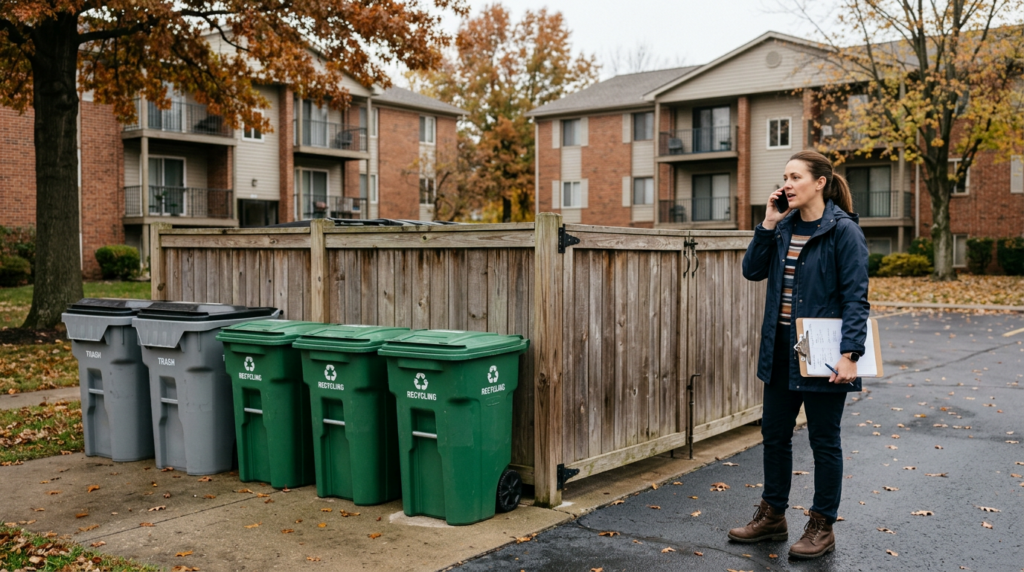
- Apartment trash pickup needs extra structure: Multi-unit properties benefit from written guidelines for overflow, contamination, and bulk item handling.
- Communication style matters: Courteous, specific answers reduce repeat calls and prevent neighbor/tenant friction.
How Trash Pickup Customer Service Should Work (Step by Step)
Customer service for waste collection works best as a simple, repeatable system. You report an issue or request, the provider confirms key details, and the request is tracked to resolution. That sounds basic, but the difference between “We’ll see what we can do” and “Here’s what happens next” is usually the difference between calm and chaos.
1) Set expectations before there’s a problem
Strong service starts with clarity. Typical expectations to confirm include pickup frequency, set-out and retrieval times, container placement, and what materials are accepted (especially for recycling). For apartment trash pickup, expectations should also cover where tenants place bags, how overflow is handled, and who to contact for property-level issues.
2) Use a consistent intake process
When you call, email, or submit a request, you should be asked for the same essentials each time: service address, contact name, best callback method, the issue type (missed pickup, damaged container, billing question, special request), and any time-sensitive constraints (for example, a move-out deadline). This structure helps reduce back-and-forth and makes it easier to resolve the request accurately.
3) Provide a clear resolution path
After intake, a good process includes confirmation (what was logged), a realistic next step (what will happen), and a close-out (how you’ll know it’s resolved). For multi-unit properties, apartment trash pickup issues often require coordination between the hauler and property staff, so the resolution path should specify who is responsible for what.
The Real-World Impact of Great (or Poor) Support
Customer support isn’t just about being polite on the phone. It affects your time, your property’s cleanliness, and how quickly small problems turn into bigger ones.
- Time: Clear answers and documented requests reduce repeat calls and “starting over” with each interaction.
- Cost control: Miscommunication can lead to extra fees, unnecessary service changes, or repeated contamination problems—especially in apartment trash pickup settings.
- Property appearance: Missed pickups and overflow can create odors and mess that frustrate neighbors or tenants.
- Tenant satisfaction: For apartments, trash area issues are highly visible. Consistent apartment trash pickup support can reduce complaints and help maintain community standards.
- Safety and access: Overfilled carts or blocked enclosures can create trip hazards and make it harder for trucks to service the site.
Common Customer Service Mistakes (Quick Checklist)
- Not documenting the issue: If there’s no ticket number, reference, or written summary, follow-up becomes harder.
- Vague problem descriptions: “Trash wasn’t picked up” is less helpful than “Cart was out by 7 p.m. the night before; still full after service window.”
- Ignoring container placement rules: Placing carts behind cars, too close together, or in blocked enclosures can cause service delays—common in apartment trash pickup areas.
- Waiting too long to report a missed pickup: The longer you wait, the harder it can be to confirm what happened and coordinate a remedy.
- Mixing prohibited items into regular trash or recycling: Contamination creates repeat issues and confusion, especially across multiple tenants.
- Letting billing questions pile up: Small invoice issues are easier to fix quickly than months later.
Smart Standards You Can Set (and How to Use Them)
- Create a one-page “service facts” sheet: Pickup days, set-out times, contact methods, and container rules. For apartment trash pickup, post it in common areas and share it at move-in.
- Report issues with specifics: Address, container location, time set out, and a short description. Keep it consistent so support can act faster.
- Ask for confirmation in writing when possible: A brief email summary reduces misunderstandings about what was requested.
- Standardize tenant messaging: Property managers can reduce overflow by using the same language every time (what goes where, what doesn’t, and what to do with bulk items).
- Set an internal escalation ladder: For apartments, decide who contacts the hauler (leasing office, maintenance lead, or property manager) so requests aren’t duplicated.
- Track recurring issues: If the same problem repeats (overflow, blocked access, contamination), adjust the site setup or communication rather than making the same complaint each week.
Professional Insight: What Most People Miss About Support Calls
Industry guidance: providers can usually sort a missed pickup faster when you share two details up front—exact container location (curb, side street, enclosure bay) and when it was set out. Those specifics help customer service confirm whether it’s a true missed pickup versus an access or placement issue—especially on apartment trash pickup routes where multiple enclosures can look similar.
When You Should Ask for Help (Instead of Guessing)
Some situations are easier to solve with direct support rather than trial-and-error. Consider reaching out when:
- You’ve had repeated missed pickups: Ask for a documented review of the service location and set-out requirements.
- Your apartment trash pickup area is overflowing regularly: This may signal a capacity, access, or tenant behavior issue that needs a coordinated plan.
- You’re seeing ongoing recycling contamination: Request clear guidelines on accepted materials and how to stage bins.
- Billing doesn’t match your understanding of service: Get clarification early and keep a written record of changes.
- You need to coordinate special requests: Confirm what’s possible, what preparation is required, and how scheduling works.
Frequently Asked Questions
What information should I have ready before contacting support?
Have the service address, best callback number/email, pickup day, where the cart or dumpster is placed, and a short description of the issue (missed pickup, container problem, billing question, or schedule clarification).
How can a property manager reduce apartment trash pickup complaints?
Use consistent tenant instructions, keep enclosures accessible, post simple rules for overflow and prohibited items, and assign one point of contact to communicate with the hauler so requests don’t conflict.
What should I do if my cart is still full after the normal service window?
Confirm the cart was set out correctly and accessible, then contact customer service with the address, placement details, and when it was placed out. Ask for confirmation that your report was logged.
Why do recycling and trash rules seem stricter at apartments?
Multi-unit sites have shared spaces and higher volume, so small issues (like contamination or blocked access) can affect many residents quickly. Clear apartment trash pickup rules help keep the area usable for everyone.
How can I avoid billing confusion when service changes?
Request written confirmation of changes (start date, service level, and any fees) and keep a simple record of who you spoke with and when.
Moving Forward
Customer service standards are easiest to evaluate when you know what “good” looks like: clear expectations, consistent intake, documented follow-through, and respectful communication. If you manage apartments, tightening apartment trash pickup guidelines can reduce overflow, complaints, and repeated contamination issues. For homeowners and businesses, a few simple habits—specific reporting and written confirmation—can save time and frustration. Use the checklists above to set expectations and keep small issues from turning into a weekly headache.
Learn More About Our Services
Customer service standards checklist (suggested benchmarks):
- Ticketing: Ask whether they provide a ticket/reference number for every request and whether you can receive it by email or text.
- Response window: Ask for an expected callback window (for example, “same day” or “within 1 business day”) and who to contact if that window is missed.
- Written confirmation: Request a short written summary of what was logged and the next step (missed pickup review, container replacement, billing review, etc.).
- Missed pickup process: Ask what qualifies as “missed,” what the cutoff time is for reporting, and what the remedy options are (return trip vs. next scheduled pickup).
- Recycling clarity: Ask for a written “accepted materials” list and what happens if a bin is contaminated.
- Apartment trash pickup coordination: For multi-unit sites, ask for a defined point of contact, a site map/enclosure labeling option, and a process for access issues (blocked gates, parked cars, locked enclosures).
- Escalation path: Ask how to escalate if the issue repeats (supervisor review, route review, site visit, updated placement instructions).
Before you call: copy/paste this message template (edit the brackets):
“Hi—I’m requesting help with [missed pickup / recycling question / container issue / billing question]. Service address: [full address]. Container type/size (if known): [cart/dumpster]. Container location: [curb/driveway side/enclosure bay #]. Set-out time/date: [time + date]. What I’m seeing: [1–2 sentences]. Best callback method: [phone/email] at [number/email]. If helpful, I can provide photos of the container location and any access issues.”
If you’d like to ask about service or support options for trash and recycling, use the form here and include your service address, container location, typical set-out time, and photos (if relevant) so the team can route your request correctly.