
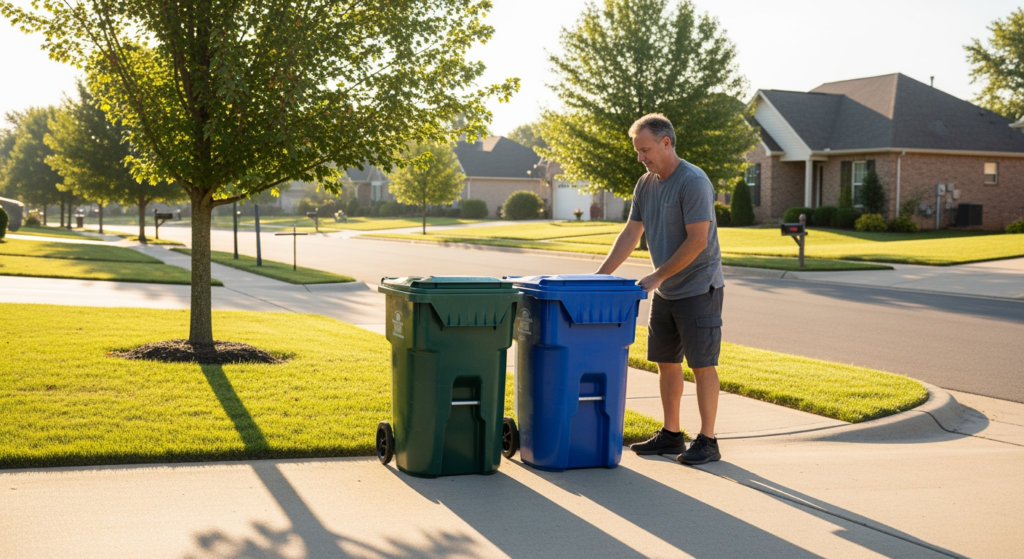
Setting up new service sounds simple—until you’re staring at a driveway wondering where the cart should go, what belongs in which container, and how to avoid missed pickups. This case-study style guide walks homeowners, landlords, and small businesses through a practical trash pickup setup example, using a realistic “new customer” scenario to show what to decide, what to avoid, and how to make day-one service run smoothly. Since spring tends to bring move-ins, cleanouts, and routine resets, it’s a good time to get your household or property on a clear, repeatable system. The goal isn’t perfection; it’s consistency—so your waste is contained, your curb area stays tidy, and your pickup day is predictable.
For a plain-English overview of how curbside service typically functions (from placement to collection basics), see Understanding Curbside Garbage Pickup: Processes and Benefits. It’s a helpful foundation before you lock in where carts live and how your household sorts materials.
In this scenario, we’ll use a typical move-in for a family home in Oconee County, GA, plus a few “real life” wrinkles: a narrow driveway, a shared mailbox area, and a household that cooks a lot (read: heavier bags and more food-related waste). If you’re looking for trash pickup setup in Oconee County, GA, the steps below are the same decisions you’ll want to make before your first collection.
The Essentials for a Smooth Start
- Pick one cart “home base” (side yard, garage edge, or screened area) so everyone knows where trash and recyclables go daily.
- Choose a consistent curb placement spot that’s easy for the truck to access and doesn’t block driveways, mailboxes, or walkways.
- Bag and tie household trash to reduce leaks, odors, and pests—especially for food waste.
- Keep recyclables clean and dry when possible; wet or food-soiled items can create sorting issues and unpleasant carts.
- Plan for “extra” weeks (move-in boxes, parties, yard projects) so overflow doesn’t become a curbside mess.
How a Real-World Trash Pickup Setup Comes Together
Background: A family moves into a single-family home and wants a simple system: one place to store carts, one place to stage them for collection, and clear rules for what goes where. They also want to avoid the two most common frustrations: (1) missed pickups due to placement issues and (2) messy carts from loose bags or liquids.
The challenge: The driveway is narrow, and the most convenient curb spot is near a shared area used for parking and mail delivery. The household produces heavier-than-average kitchen waste, and the kids are still learning what belongs in recycling.
The approach: We break the setup into three decisions—storage, daily use, and collection staging—then add a simple “overflow plan” so the system holds up during busy weeks.
1) Storage decision (where carts live most days)
The family chooses a side-yard spot close to the kitchen door path. The priority is convenience: if it’s annoying to reach, people will start leaving bags in the garage or on the porch. They add a small, lidded kitchen bin for food-related trash so bags stay tied and contained before going outside.
2) Daily-use decision (how waste gets into the right cart)
They use two simple rules:
- Trash: bag it, tie it, and keep liquids out of the cart when possible (let wet items drain or wrap them).
- Recycling: quick rinse for food containers when practical; keep cardboard broken down to save space.
This reduces cart odor, prevents “mystery drips” on the driveway, and keeps recyclables from becoming contaminated by food residue.
3) Collection staging decision (where carts go for pickup)
They pick a curb spot that’s visible and accessible, leaving clear space around the carts. The family agrees on a single staging routine: carts go out the evening before collection and come back to the storage spot the same day after pickup. Consistency is what prevents missed service and neighborhood clutter.
4) Overflow plan (because life happens)
They designate one “overflow area” (a sealed bin in the garage for bagged trash only) for weeks with extra waste. The rule is simple: no loose trash, no open boxes of food waste, and no guessing—if it doesn’t fit safely, they plan an additional disposal solution rather than piling items at the curb.
The Real-World Costs of Getting It Wrong
A sloppy start can create problems that feel small at first—but add up quickly:
- Missed or delayed collection: Carts that are hard to access or placed inconsistently can lead to confusion and service interruptions.
- Odors and pests: Loose bags, liquids, or food waste sitting in warm conditions can attract animals and make carts unpleasant to handle.
- Driveway and curb mess: Overfilled containers and torn bags can create litter that you end up cleaning—often at the worst possible time.
- Recycling disappointment: When recyclables are mixed with food waste or liquids, the load may be harder to process (rules vary by program and should be confirmed locally).
Common Setup Mistakes to Avoid
- ☐ Storing carts too far from daily traffic — If it’s inconvenient, bags will end up in “temporary” spots that become permanent.
- ☐ Letting loose trash go into the cart — Loose items increase mess and make cleanup harder if bags tear.
- ☐ Overfilling and forcing the lid open — An open lid invites animals and allows rainwater in, creating heavier, messier waste.
- ☐ Mixing food-soiled items into recycling — Contamination can reduce the usefulness of recyclables; when in doubt, check local guidance.
- ☐ No plan for move-in boxes or party weekends — Overflow is predictable; plan for it before it becomes a curb pile.
A Simple Action Plan You Can Copy
- ☐ Choose a cart “home base” within a short walk of your main entry (kitchen/garage) and keep lids closed.
- ☐ Set one staging spot at the curb that doesn’t block access points and is easy to repeat every week.
- ☐ Use a kitchen bin with liners and tie bags before they go outside—especially for food waste.
- ☐ Break down cardboard immediately and keep recycling as dry as you reasonably can.
- ☐ Create an overflow rule: if it doesn’t fit with the lid closed, store it securely and plan a proper disposal option.
- ☐ Teach the household in 60 seconds with two rules posted inside a cabinet: “Bag trash. Keep food out of recycling.”
When It Makes Sense to Ask for Help
Consider professional support if any of the following are true:
- You’re managing multiple units or tenants and need a repeatable system that reduces overflow and contamination.
- Your household routinely produces more waste than your container holds and you need options to prevent chronic overfilling.
- You’re dealing with persistent odors, pests, or leaking bags and want to troubleshoot storage and handling practices.
- You’re unsure what can be recycled locally and need a clear, program-aligned routine (requirements vary by area and provider).
Common Questions Answered
Where should I place my cart for collection?
Pick a consistent curb location that’s easy to access and doesn’t block driveways, sidewalks, or mail access. If you’re unsure, confirm placement guidance with your local provider.
Do I need to bag all household waste?
Bagging and tying trash is a practical way to reduce leaks, odors, and pests. Some bulky items may need different handling, so check with your provider for what’s accepted.
How can I reduce odors in my trash cart?
Keep bags tied, avoid pouring liquids into the cart, and consider double-bagging messy food waste. Rinsing the cart periodically can also help if residue builds up.
What should I do if I have more waste than fits in the container?
Avoid overfilling with the lid open. Store extra bagged trash securely until you can dispose of it properly, and ask your provider about options for additional capacity or solutions.
How do I prevent recycling from getting contaminated?
Keep food and liquids out of recycling and break down cardboard to keep it dry. Since accepted items vary by program, confirm local guidelines before making a household “always/never” list.
Where to Go from Here
A solid setup is mostly about repeatable habits: a convenient storage spot, a consistent curb staging location, and simple household rules that prevent mess. Use the case-study approach above to make decisions once—then stop thinking about them every week. If your household or property has constraints like tight access, frequent overflow, or recurring odor issues, getting a second set of eyes on the routine can save time and frustration.