
Choosing the right trash pickup frequency is one of those small decisions that quietly runs your household (or business) until it doesn’t—usually when the bin is overflowing and raccoons think you set out a buffet. If you’re a homeowner, property manager, or business owner in Athens, GA, the goal is simple: match your real-life waste volume to a schedule that keeps things clean, predictable, and easy to manage. During the summer months, extra cookouts, visitors, and yard cleanup can make your usual routine feel suddenly “too small.” The good news is you don’t need to guess; you can choose a pickup plan by looking at a few practical factors and testing them in a structured way. If you want a quick primer on how curbside service typically works, see Understanding Curbside Garbage Pickup: Processes and Benefits.
Key Points to Know Before You Pick a Schedule
- Start with volume, not habits: your ideal schedule depends on how fast your bins fill, not what you “usually” do.
- Weekly is a common baseline: many households do well with weekly service, then adjust up or down based on overflow and odors.
- Businesses should map waste to operations: foot traffic, packaging, and service days often matter more than square footage.
- Plan for spikes: parties, cleanouts, move-ins, and renovations can temporarily require more capacity or extra pickups.
- Make it measurable: track how full your container is on collection day for 2–4 cycles to confirm the fit.
How Trash Pickup Frequency Decisions Actually Work
Picking a schedule is really a balancing act between capacity (bin size and how quickly it fills), comfort (odor, pests, and mess), and constraints (storage space, access, and budget). Too infrequent and you risk overflow, torn bags, and “mystery smells.” Too frequent and you may pay for capacity you don’t use.
A practical approach is to treat your waste like a simple input/output system: how much you generate in a week, how much your container holds, and how sensitive you are to storing waste longer (especially food waste). Once you know those three, the right cadence is usually obvious—and easy to justify.
The Real-World Impact on Cleanliness, Cost, and Convenience
Your collection cadence affects more than the curb on pickup day. It can influence how often you take out kitchen bags, whether your bin area stays tidy, and how much time you spend dealing with overflow or scattered trash.
- Time: fewer pickups can mean more time breaking down boxes, compressing bags, or doing “trash Tetris.”
- Cost control: right-sizing the schedule can help avoid paying for unused service or paying later through extra trips and cleanup.
- Odors and pests: longer storage windows can increase odor risk, especially with food waste and hot weather.
- Operational flow (for businesses): if pickups don’t align with busy days, waste can stack up fast and create back-of-house headaches.
Common Missteps When Choosing a Pickup Schedule
- Assuming “weekly is always enough”: households with diapers, frequent cooking, or lots of deliveries may need more capacity.
- Ignoring recycling and flattening habits: not breaking down boxes can make a bin look “full” long before it truly has to be.
- Not accounting for storage space: choosing larger capacity is only helpful if you can store carts or dumpsters safely and accessibly.
- Forgetting seasonal or project spikes: move-outs, cleanouts, and yard work can overwhelm a schedule that’s fine the rest of the year.
- Making it a one-shot decision: not reviewing after a few cycles can lock you into a plan that’s clearly mismatched.
- Letting overflow become “normal”: once bags sit outside the container, cleanup and pest issues become more likely.
Your Step-by-Step Plan to Choose the Right Trash Pickup Frequency
What you’ll achieve: a schedule that fits your waste volume, reduces overflow, and feels predictable week to week.
Prerequisites: know your current container size(s), where you store them, and what types of waste you generate most (food, packaging, yard debris, etc.).
-
Estimate your weekly waste volume.
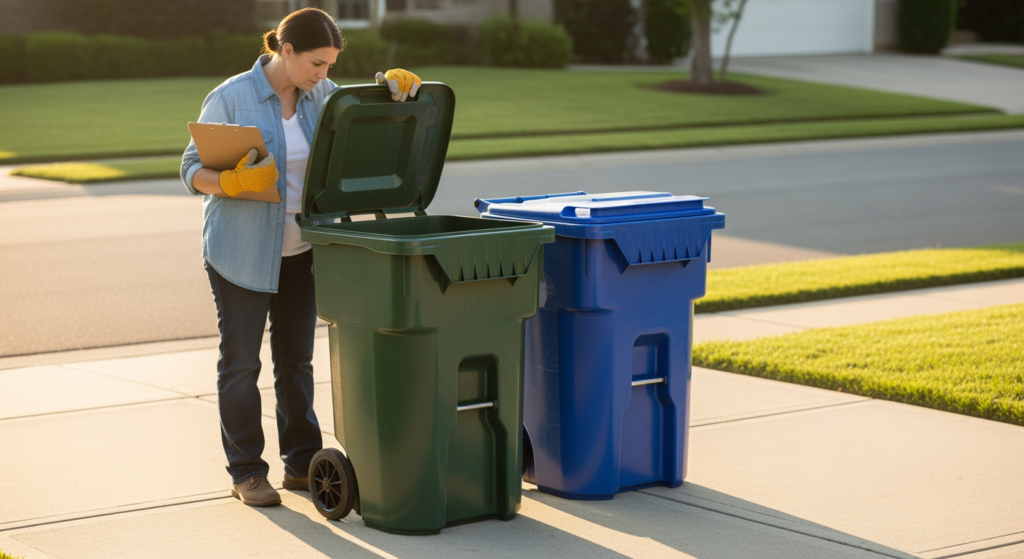
Walk through a typical week and note the “big drivers” (meal prep, deliveries, kids’ activities, office traffic, etc.). If you’re unsure, do a simple 2-week check: how full is the bin on collection day?
Tip: Use a quick scale: 25%, 50%, 75%, or packed/overflowing. You don’t need perfect numbers—just consistency.
-
Identify your pain points (overflow, odor, mess, or storage).
Decide what’s actually pushing you to change: bags piling up, smells, animals getting in, or a bin area that’s hard to manage.
Tip: If odor is the main issue, focus on reducing “time in bin” for food waste and keeping lids fully closed.
-
Match frequency to your “worst normal week.”
Don’t plan around your lightest week. Plan around your busiest normal week so you’re not constantly playing catch-up.
Tip: If your bin is regularly at 75–100% by pickup day, that’s a sign you may need more capacity or more frequent service.
-
Reduce volume before you increase pickups.
Flatten boxes, consolidate bags, and keep recyclables separated where applicable. Often, a small behavior change prevents a big schedule change.
Tip: Create one “breakdown spot” (garage corner or utility area) so cardboard doesn’t balloon into half your bin.
-
Plan for spikes with a temporary solution.
For cleanouts, move-ins, or renovations, consider arranging an extra pickup or another appropriate non-hazardous disposal option rather than permanently changing your routine.
Tip: Keep a short list of the months or situations when you tend to generate more waste so you can plan ahead.
-
Test, then adjust after 2–4 collection cycles.
Once you make a change, track results. The “right” cadence should feel boring—in a good way.
Tip: If you’re consistently under 50% full, you may be able to reduce service. If you’re still overflowing, you likely need more capacity or a tighter cadence.
Professional Insight: The Small Detail Most People Miss
In practice, we often see that the “right schedule” isn’t just about how much trash you generate—it’s about how consistently you can keep everything contained between pickups. A household that breaks down boxes and keeps lids closed can do fine with fewer collections than a household producing the same volume but leaving loose bags or overstuffed carts.
When It’s Time to Ask for Help Choosing a Schedule
- You regularly have overflow: bags outside the container are a sign your plan isn’t matching your volume.
- Odors become a frequent issue: especially if food waste sits longer than you’re comfortable with.
- You’re managing a multi-unit or commercial site: pickup timing, access, and container placement can get complicated quickly.
- You’re starting or expanding a business: changes in foot traffic or packaging can require a different service cadence.
- You’re unsure what’s accepted where you live: local rules and service options can vary and should be confirmed with your provider.
Common Questions Answered
How do I know if once a week is enough?
If your container is typically under about three-quarters full on collection day and you’re not dealing with odors or overflow, weekly service may be a workable baseline. If it’s consistently packed or spilling over, consider more capacity or more frequent collection.
Should I increase pickups or get a bigger container?
If you have occasional spikes (like cleanouts), a temporary increase or extra pickup can make sense. If you’re consistently running out of space, a larger container or a different cadence may be the better long-term fit.
What if my schedule changes because of weather or access issues?
Service can be affected by conditions that impact safe access. If you’re worried about missed or delayed collection, ask your provider how they communicate schedule changes and what the best setout practices are for your property.
Do businesses need a different approach than homeowners?
Often, yes. Businesses should align service with operational peaks—like delivery days, weekends, or high-traffic periods—so waste doesn’t pile up when you’re busiest.
Can I change my service cadence later?
Many providers can adjust service levels, but options and policies vary. It’s best to ask what changes are available and whether there are any notice requirements before you commit.
Taking Action
Choosing the right schedule comes down to a simple check: how full your container gets, how comfortable you are storing waste between pickups, and whether your routine has predictable spikes. Track your fill level for a few cycles, tighten up easy habits like breaking down boxes, and then adjust service only as needed. When your plan fits, trash day becomes a quick, boring task—exactly what you want.
Book Your Consultation
Schedule a free consultation with our experts.